Table of Contents
ToggleFinal Fantasy Dissidia PSP remains one of the most captivating fighting games ever released for Sony’s handheld, even over a decade after launch. This isn’t just another spin-off, it’s a love letter to the entire Final Fantasy franchise wrapped in a genuinely deep combat system. Whether you’re a longtime fan revisiting the Portable Hardtype edition or discovering it for the first time through emulation, understanding the mechanics, character matchups, and strategic nuances will transform your experience from casual button-mashing to genuine competitive play. The game rewards patience, rewards learning, and most importantly, rewards players who understand how to leverage each character’s unique toolkit. This guide covers everything from basic mechanics to advanced strategies, equipped loadouts, and the meta considerations that still matter today.
Key Takeaways
- Final Fantasy Dissidia PSP is a deep 3D fighting game that balances accessibility for casual players with competitive mechanics rewarding advanced study and resource management.
- The Brave and HP attack system creates a unique risk-reward dynamic where you must build Brave meter through safe attacks before converting damage into direct HP hits.
- Mastering spacing, character matchups, and EX Gauge management separates casual players from competitive opponents more than mechanical execution alone.
- Final Fantasy Dissidia PSP expanded the fighting game genre by proving that elegant system design and positioning strategy matter more than motion inputs or extreme technical barriers.
- The game’s 34-character roster in Dissidia 012 offers distinct playstyles and meta diversity, ensuring nearly every player finds a viable main character.
- Modern players keep Dissidia PSP alive through emulation communities, online tournaments, and dedicated Discord groups, proving the game’s enduring competitive appeal over a decade after release.
What Is Final Fantasy Dissidia PSP?
Final Fantasy Dissidia PSP is a 3D one-on-one fighting game developed by Square Enix and released in 2008 in Japan and 2009 in North America and Europe. It’s a departure from traditional Final Fantasy gameplay, ditching turn-based mechanics for real-time, arena-based combat inspired by games like Soul Calibur. The game features two distinct versions: the original Dissidia and the expanded Dissidia 012, also known as the Portable Hardtype edition in Japan. The Hardtype edition added new characters, balance adjustments, and additional storyline content, making it the definitive PSP version.
The premise is straightforward yet ambitious: Cosmos and Chaos, two primordial forces, clash across multiple worlds. Final Fantasy heroes and villains are forced to fight for their respective gods, creating an all-star roster spanning 13 games at the time. The game launched on PSP initially, then received ports and rereleases. Today, it’s still playable on original hardware or via emulation on PC and mobile platforms, though compatibility varies.
What makes Dissidia special is how it respects both casual players and competitive ones. The story mode is genuinely entertaining, the gameplay is mechanically rich, and the character variety ensures nearly everyone finds their main. Unlike most fighting games, Dissidia doesn’t demand frame-perfect execution, it demands smart decision-making and resource management.
Game Overview and Story
Plot and Campaign Mode
Dissidia’s story takes place across multiple cycles of conflict. Cosmos summons warriors from across Final Fantasy history to battle Chaos’s champions in a sprawling war. The narrative is grounded in Final Fantasy tradition, there’s genuine character development, thematic depth, and fan service that doesn’t feel lazy.
The main campaign, called Arcade Mode in the original but expanded significantly in 012, follows each character’s personal story arc. Cloud’s journey involves grappling with his fractured identity. Squall confronts his isolation and growth as a leader. Sephiroth’s presence looms over everything. The writing respects these characters and their legacies, rather than reducing them to cameos.
Campaign Mode isn’t just cutscenes, it’s a series of increasingly difficult battles with story checkpoints. You’ll encounter rival characters, face multiple opponents in succession, and unlock new abilities and equipment by progressing. The difficulty scales reasonably, teaching you mechanics gradually before throwing genuinely challenging encounters at you. The final battles are brutal, especially on higher difficulty settings, requiring you to optimize your build and understand matchups.
Dissidia 012 adds the “Duodecim” storyline, which recontextualizes events from the original and introduces new character interactions. It’s substantially more content and deepens the overall narrative scope.
Playable Characters and Roster
The original Dissidia launched with 22 characters, two from each numbered Final Fantasy game (one hero, one villain). Dissidia 012 expanded the roster to 34 characters by adding protagonists like Laguna, Gilgamesh, and Kain alongside new antagonists.
The roster breaks down like this:
Heroes: Warrior of Light, Firion, Onion Knight, Cecil, Bartz, Terra, Cloud, Squall, Zidane, Tidus, Shidoh, Vaan, Lightning, and others added in 012.
Villains: Garland, Emperor, Onion Knight (dual role), Golbez, Exdeath, Kefka, Sephiroth, Ultimecia, Necron, Jecht, Vayne, and more in the expanded edition.
Each character has a distinct playstyle. Cloud is a balanced swordsman with high damage combos. Squall excels at ranged pressure with gunblade combos. Kefka is a zoning nightmare with delayed hitbox magic. Cecil switches between Paladin and Dark Knight stances mid-battle. This variety means the meta isn’t dominated by a single archetype, positioning, spacing, and character matchups create legitimate diversity in competitive play.
The expanded Hardtype roster in 012 introduces characters like Tifa (fast, combo-heavy), Vaan (aerial specialist), and Laguna (projectile zoner). Each addition shifted the meta and created new matchup dynamics.
Combat System and Mechanics
EX Mode and Summons
The EX Meter is Dissidia’s core resource system. As you deal and receive damage, your EX Meter fills. When full, you can activate EX Mode, which temporarily boosts your character with enhanced damage, faster movement, invincibility frames on specific attacks, and unique EX abilities. EX Mode decisions are tactical, blow it immediately for damage, save it for defensive situations, or combo into EX abilities for massive damage bursts.
EX abilities vary wildly by character. Cloud’s Omnislash during EX Mode is one of the highest damage outputs in the game. Squall’s Lion Heart combo extends his range and pressure. Kefka’s EX abilities create chaos with unblockable effects. Timing EX activation against your opponent’s EX Meter status is crucial, using it while they’re vulnerable wins rounds, but wasting it on blocked attacks costs you momentum.
Summons are your ultimate resource. As you battle, a Summon Gauge fills. When ready, you can call a summon, brief cutscenes that deal damage, heal you, or grant temporary stat buffs. Summons turn the tide of close matches. Summoning when low on health can swing a deficit into victory, but summoning into an opponent’s EX Mode window is a punishable mistake. The summon roster includes Final Fantasy classics: Ifrit, Odin, Neo Bahamut, Leviathan, and more, each with different effects and timing windows.
Brave and HP Attacks
Dissidia’s attack taxonomy is unique compared to traditional fighting games. There are two damage types:
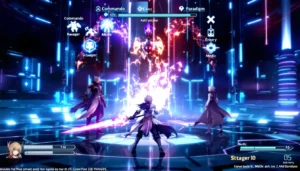
Brave Attacks deplete your opponent’s Brave value. They’re safer, combo-friendly, and low-risk. Landing Brave attacks builds your own Brave meter while reducing theirs. When you break their Brave (reduce it to 0), their Brave resets and transfers to you, a powerful advantage.
HP Attacks deal direct damage to health. But, you can only land HP Attacks after a successful Brave combo or when your opponent has 0 Brave. HP Attacks are the finishing move, build Brave advantage, land a combo, then convert to HP damage. This creates a risk-reward dynamic missing from most fighting games: do you finish a combo now with an HP Attack, or extend the Brave combo for more meter and positioning?
The balance between these systems creates fascinating decision trees. A character like Squall excels at chaining Brave combos into massive HP conversions. Kefka prioritizes chip damage and Brave breaks through ranged pressure. Cecil can switch between high-combo Paladin mode and explosive Dark Knight bursts.
Combo timing matters significantly. Chaining Brave attacks without dropping combos builds more Brave than scattered hits. Understanding hit cancels, juggle states, and knockback properties separates casual players from competitive ones. Wall bounces and environment interactions add positioning layers, hitting an opponent toward arena walls extends combo opportunities.
Character Builds and Strategies
Best Characters for Beginners
Not all characters have equal learning curves. Some reward fundamental understanding of spacing and timing: others demand precise execution or exotic knowledge.
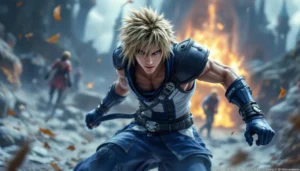
Cloud is the archetypal beginner character. His moveset is straightforward, his combos are forgiving, and his damage output is respectable without complex setups. His Limit gauge builds naturally through combat, and his Limit abilities are impactful but not mandatory for success. You can genuinely win matches through solid fundamentals with Cloud, making him ideal for learning game flow.
Tidus is another excellent starting point. He’s fast, his combos are intuitive, and his Aeons summon ability teaches resource management without being overwhelming. His aerial game is strong but not required, you can win through grounded play if needed.
Terra bridges offense and defense well. Her Fire-tier magic spam teaches zoning without requiring perfect spacing. New players can learn stage control fundamentals through Terra’s playstyle, then branch into more complex characters.
Characters to avoid initially: Kefka (extremely positioning-dependent), Ultimecia (requires perfect Brave combo sequencing), and Garland (low health, high execution barrier). These characters reward mastery but punish mistakes severely.
Advanced Competitive Strategies
Once you’ve grasped fundamentals, the competitive layer deepens significantly.
Spacing and stage positioning determine matchups. Characters like Squall and Sephiroth dominate at mid-range, where their sword reach and projectiles control space. Up close, rushdown characters like Tifa and Firion take over. Understanding your character’s optimal spacing and your opponent’s weakness zone wins more matches than mechanical skill alone.
Brave break sequencing is where games are won. A player skilled at converting Brave breaks into HP damage consistently applies pressure. Advanced players bait opponents into Brave-negative situations, then exploit the advantage. Some characters like Ultimecia can build Brave exponentially through extended combos, making them dangerous in skilled hands.
EX Gauge management separates amateurs from veterans. Competitive players track both players’ EX gauges constantly. Do you activate EX mode now for an offensive burst, or save it for defensive counters when your opponent activates theirs? In the Hardtype meta, high-level matches involve constant EX management calculations, using it too early wastes potential, but hesitating allows opponents to dictate tempo.
Summon prediction adds a psychological layer. Experienced players anticipate when summons will activate and plan accordingly. Do you activate yours while your opponent has advantage (risky but game-changing), or use it defensively when losing? Top-tier matches involve mind games around summon timing.
Character-specific tech is essential. Each character has bread-and-butter combos, situational follow-ups, and positioning resets that newer players won’t know. Learning your main’s full moveset and animation-canceling techniques separates consistent winners from inconsistent players.
Equipment and Ability Customization
Equipment systems in Dissidia aren’t cosmetic, they directly impact stats and gameplay.
Each character can equip:
- Weapons (affects physical damage and appearance)
- Armor (affects defense)
- Accessories (provides stat boosts or passive effects)
- Abilities (grant additional moves or passive enhancements)
Optimizing your loadout requires understanding your matchups. If you’re facing heavy zoners, equip abilities that enhance your approach tools. Against rushdown opponents, prioritize defensive accessories that boost defense or grant invincibility frames on specific moves.
Ability selection is where strategy crystallizes. Summons, Assist abilities, and passive Boosts are customizable. Some players prioritize offensive summons for knockout power. Others favor defensive summons for safety. The best builds often balance offense and defense, enough damage to threaten, enough durability to survive opponent barrages.
Stat distribution matters too. Some competitive builds maximize damage output at the expense of defense. Others emphasize survivability and Brave control. Characters like Squall benefit from attack-heavy builds that amplify his natural combo damage. Cecil prefers balanced builds that leverage both his Paladin and Dark Knight modes. Final Fantasy 14 Class offers insights into character optimization that parallel Dissidia’s strategic depth, though Final Fantasy 14 emphasizes different mechanics than Dissidia’s Brave/HP system.
Modes and Gameplay Features
Arcade Mode and Challenges
Arcade Mode is Dissidia’s single-player backbone. You select a character and battle through a gauntlet of opponents, progressively increasing in difficulty. The mode culminates in fights against specific rival characters relevant to your protagonist’s story, then a final confrontation against Cosmos or Chaos.
Difficulty settings scale meaningfully. Beginner difficulty is forgiving, opponents make predictable decisions and don’t optimize builds. Normal difficulty expects you to understand your character’s core combos and spacing. Hard difficulty introduces intelligent AI that reads your patterns, uses EX Mode strategically, and adapts to your gameplan. Very Hard and Ultimate difficulties are brutal, AI opponents play nearly perfect matches, punishing mistakes severely.
Arcade Mode progression unlocks equipment, abilities, and new costumes. Grinding Arcade Mode on varying difficulties provides steady progression and teaches matchup knowledge against AI opponents. The psychological pressure of high-difficulty runs is surprisingly intense, one mistake against Ultimate AI can spiral into a loss, teaching you defensive discipline.
Challenge Modes complement Arcade gameplay. Time trials test your combo execution. Survival modes require consecutive victories without healing between matches. Boss Rush encounters throw specific powerful opponents at you in succession. These modes reward mechanical mastery and stamina, winning five fights in a row demands consistency and composure.
Practice Mode is underrated. Setting AI opponents to specific difficulty levels, practice modes, and recovery patterns lets you lab character matchups, test new combos, and develop muscle memory without pressure. Serious players spend substantial time in Practice Mode perfecting frame-tight execution.
Multiplayer and Ad-Hoc Features
Dissidia’s multiplayer is where the game truly shines. Ad-Hoc networking allowed PSP-to-PSP battles locally, and Dissidia 012 expanded online functionality.
On original PSP hardware, multiplayer required physical proximity and working ad-hoc connections. Players brought their systems together for tournaments, casual sessions, and ranked matchups. The competitive Dissidia scene emerged from these local tournaments, players like “Sonicfox” equivalent figures dominated regional scenes through matchup knowledge and mechanical skill.
Modern players experience Dissidia multiplayer through emulation. Online play via emulators (like Dolphin for console versions, or DeSmuME netplay adaptations) connects players globally. The emulation community maintains active Dissidia servers and tournaments, though finding opponents requires joining dedicated Discord communities and forums.
Online multiplayer dynamics differ from arcade mode. Human opponents read your patterns, adapt to your gameplan, and employ psychological pressure. Facing real players teaches you adaptation, you can’t rely on single strategies. Seasoned online players know the metagame, optimize equipment for specific matchups, and exploit popular character weaknesses.
Gematsu and Siliconera have covered various Final Fantasy fighting game releases and competitive scenes, providing context for how Dissidia fits into the broader fighting game landscape and Japanese gaming culture.
Tips for Mastering the Game
Essential Controls and Combos
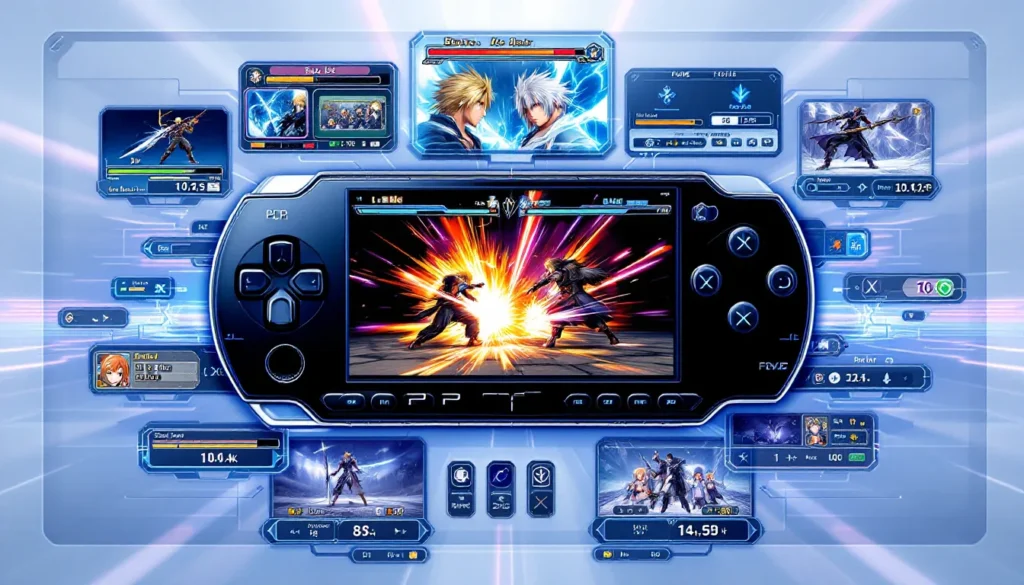
Dissidia’s control layout differs from traditional fighting games. The PSP’s limited button count necessitated efficient binding:
- X Button: Brave attacks
- Square Button: HP attacks
- Circle Button: Block/Guard
- Triangle Button: Abilities and Summons
- Analog Stick: Movement and directional inputs
Because the PSP lacks a traditional D-pad-style input, command inputs are simplified. Most of Dissidia’s special moves use basic stick inputs plus button combinations, avoiding complex motion requirements. This accessibility makes the game approachable but creates surprising depth once you layer in positioning and spacing.
Bread-and-butter combos for each character form the foundation of execution. Cloud’s simple combo chains Brave attacks into his Cross-Slash for knockback and positioning reset. Squall chains gunblade shots into Rough Divide, advancing while maintaining pressure. Learning your character’s optimal Brave chain and HP conversion points is non-negotiable.
Hit cancels extend combos beyond obvious chains. Inputting your next attack during the animation of your previous attack “cancels” into the next move, creating longer combos than button-mashing allows. Advanced players layer hit cancels with directional inputs to redirect combo flow, creating mixups that trap opponents.
Guard cancels are defensive fundamentals. Holding block, then inputting a direction plus attack button cancels your guard animation into a counter or dash. Guard canceling lets you safely exit blocking situations, transition into offense, and create space against aggressive opponents.
Wall bounces and knockback management matter tactically. Hitting opponents toward arena walls extends juggle opportunities. Knowing which of your moves trigger wall bounces, which guarantee follow-ups, and which leave you vulnerable teaches optimal combo execution in context.
Common Mistakes to Avoid
Overextending your Brave meter is the most common beginner mistake. New players spam Brave attacks until they’ve accumulated massive Brave, then lose it all to a single Brave break, handing opponents an instant advantage. Successful players spend Brave deliberately, converting accumulated Brave into HP damage rather than letting it accumulate indefinitely.
Ignoring spacing and spacing loses matches. Dissidia isn’t about raw damage output, it’s about controlling where the fight happens. Zoners like Sephiroth and Squall dominate at mid-range. Rushdown characters like Tifa struggle against good spacing. Learning your character’s optimal range and actively maintaining positioning wins more matchups than mechanical skill alone.
Activating EX Mode reactively wastes resources. Pressing EX mode when you’re already losing usually doesn’t recover the deficit, it wastes your most powerful resource. Experienced players activate EX mode proactively, setting up massive damage combos or resetting pressure, rather than desperately hoping EX saves them when behind.
Summoning predictably is punishable at high levels. If you summon every time your gauge fills, observant opponents plan around it. Top players vary summon timing, sometimes saving summons for defensive situations, other times using them offensively to secure knockouts.
Not learning your opponent’s character limits adaptation. You don’t need to main every character, but understanding what moves are safe, which combos your opponent can chain, and what ranges they threaten lets you play more defensively and exploit matchup advantages. Watching high-level matches of your upcoming opponent’s character teaches you what to expect.
Neglecting practice mode stalls progression. Casual play is fun, but deliberate practice in controlled environments builds faster improvement. Setting AI to specific difficulties, practicing specific combos, and drilling matchup responses in practice mode accelerates learning compared to hoping arcade mode teaches you everything. Twinfinite has published extensive guides on fighting game fundamentals applicable to Dissidia’s system, covering spacing, frame data analysis, and matchup strategy. Final Fantasy 14 Expansions may seem unrelated, but understanding narrative progression in Final Fantasy games deepens your connection to Dissidia’s character-driven story elements and motivations for why these characters fight.
Legacy and Impact on the Series
Final Fantasy Dissidia PSP occupies a unique position in Final Fantasy history. It wasn’t the first fighting game featuring Final Fantasy characters, that distinction belongs to earlier arcade fighters, but it was the first to achieve mainstream success and critical acclaim while respecting the source material.
Dissidia’s impact reverberates through Square Enix’s subsequent projects. The game’s success led to arcade versions, console ports, and eventually the 2015 Dissidia Final Fantasy arcade game (with subsequent mobile and console releases). The modern Dissidia games don’t exist without the PSP version’s blueprint, the Brave/HP attack system, character customization, and story structure persist in newer iterations.
The competitive community that emerged from Dissidia PSP highlighted underexplored competitive niches. Before esports exploded, Dissidia had dedicated players grinding matchups, optimizing loadouts, and competing in regional tournaments. These players pioneered competitive scene infrastructure that influenced how other fighting games organized community tournaments.
Narratively, Dissidia restored legitimacy to Final Fantasy fan service. Rather than cheap crossovers, Dissidia treated its cast with respect, developing character arcs, exploring thematic connections between games, and creating genuinely compelling reasons for these characters to interact. The game’s writing proved Final Fantasy’s breadth could support ambitious storytelling beyond individual entries.
The emulation community keeps Dissidia alive today. On PC via emulators, on mobile through various ports, and on original PSP hardware, new players still discover the game. The competitive scene persists in Discord communities, tournament circuits, and casual groups that gather online. Dissidia PSP never became a mainstream esport, but it carved out a dedicated audience that proves the game’s enduring appeal.
Modern fighting games owe Dissidia debt for demonstrating that fighting games don’t require motion inputs or extreme technical barriers to achieve mechanical depth. Dissidia proved that elegant system design, meaningful resource management, and rewarding positioning create engaging competitive gameplay.
Conclusion
Final Fantasy Dissidia PSP remains a singular achievement, a fighting game that respects its legacy, welcomes newcomers, and rewards dedicated study equally. Whether you’re approaching it for the first time or rediscovering it after years away, the game’s mechanical depth and character variety offer hundreds of hours of engagement.
Starting with fundamentals, understanding Brave and HP attacks, learning your character’s combos, and practicing spacing, gives you the foundation for genuine improvement. Moving into advanced territory means tracking EX Meters, reading opponent patterns, managing summon timing, and optimizing equipment for specific matchups. The progression feels natural, earned through consistent play and deliberate practice.
The game’s legacy proves that fighting games thrive when they balance accessibility with depth. Dissidia opened doors for newer players while providing infinite mastery for competitive grinders. That balance, combined with genuine respect for Final Fantasy’s history, created something that transcends typical franchise crossovers.
Whether you’re grinding Arcade Mode, challenging friends locally, or competing online through emulation, Dissidia PSP delivers the thing that matters most: consistently engaging, rewarding gameplay that respects your time investment and celebrates the Final Fantasy legacy in the process.