Table of Contents
ToggleChaos stands as one of Final Fantasy’s most enduring and enigmatic antagonists. From the very first game in 1987 to modern-day interpretations across multiple titles, this primordial force has captivated players with its philosophical complexity and devastating power. Whether you’re diving into the original NES game, experiencing the expanded narrative of Dissidia Final Fantasy, or exploring references across the MMORPG landscape, understanding Chaos is essential to appreciating what makes the Final Fantasy franchise tick. This guide breaks down everything you need to know about this legendary villain, from its lore origins and iconic boss fights to its philosophical significance and lasting impact on the series’ design philosophy. Whether you’re a newcomer seeking context or a veteran curious about how interpretations have evolved, we’ll cover all the essential details about Final Fantasy’s chaos.
Key Takeaways
- Final Fantasy chaos represents a primordial cosmic force of entropy and destruction that resurfaces cyclically across the franchise, transcending the role of a traditional villain by embodying philosophical inevitability rather than personal malice.
- In the original Final Fantasy I, defeating Chaos requires minimum level 30-35 characters, Diamond-tier equipment, strategic use of Haste and Protect spells, and sustained healing throughout a lengthy boss fight that unfolds in two progressively intense phases.
- Dissidia Final Fantasy reimagined Chaos as an intelligent, character-driven antagonist with complex motivations who views ending the eternal conflict with Cosmos as an act of mercy, showcasing sophisticated philosophical storytelling.
- Chaos’s mechanics in Dissidia emphasize spatial control and ranged harassment through signature moves like Entropy and Reality Marble, rewarding calculated, patient gameplay over aggressive button-mashing.
- The Chaos/Cosmos dichotomy represents a foundational symbolic framework throughout Final Fantasy that explores balance between order and disorder, with this philosophy increasingly shaping how modern titles design antagonists and approach thematic storytelling.
- Final Fantasy chaos continues to influence franchise design nearly four decades after its debut, establishing that compelling antagonists challenge heroes’ worldviews through philosophical opposition rather than conventional villainy, a concept reflected in contemporary games like Final Fantasy XIV.
Who Is Chaos in Final Fantasy?
The Origin and Lore of Chaos
Chaos represents a fundamental force in the Final Fantasy multiverse, not merely a villain, but an embodiment of entropy and cosmic conflict. In the original Final Fantasy (1987), Chaos exists as the primordial evil sealed away by the Warriors of Light, only to be mysteriously released as the game’s climactic threat. This entity isn’t driven by ambition, vengeance, or conquest in the traditional sense: it simply embodies destruction and instability as core aspects of its nature.
The lore surrounding Chaos deepens considerably across different titles. It’s portrayed as cyclical, something that eternally resurfaces when balance tips too far in one direction. In several canonical interpretations, Chaos isn’t entirely evil but rather an inevitable cosmic force, much like entropy itself. Its relationship with the concept of order defines much of its characterization. Think of it less as a character with personality quirks and more as a natural disaster wearing a face, dangerous, incomprehensible to mortals, and capable of reshaping entire worlds.
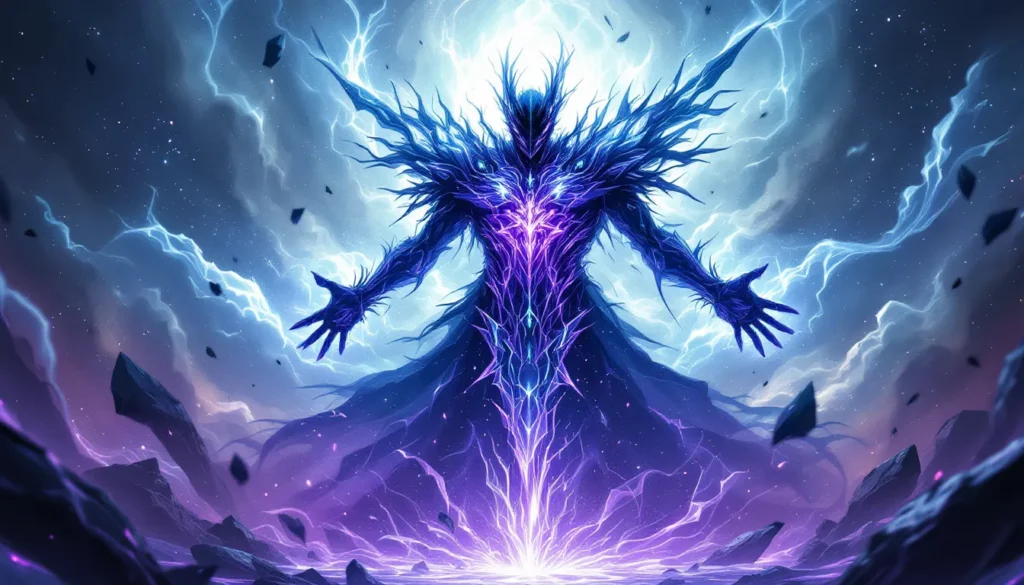
The visual design of Chaos reinforces this otherworldly nature. Multiple versions exist across games, but nearly all share similar qualities: immense stature, ethereal or demonic aesthetics, and an aura of wrongness that transcends simple intimidation. Players encountering Chaos for the first time in 1987 found a boss unlike anything else in gaming, abstract yet terrifyingly real.
Chaos Across Different Final Fantasy Titles
While most people associate Chaos with Final Fantasy I, the entity appears or is referenced across numerous games in the franchise. Final Fantasy IV hints at similar cosmic forces, though without the explicit naming. Final Fantasy V introduces Neo Chaos, demonstrating that the concept evolves across timelines. But, Dissidia Final Fantasy (2009) and its sequel Dissidia Final Fantasy NT (2018) offer the most comprehensive exploration of Chaos’s character and motivations across multiple narrative interpretations.
Each appearance maintains thematic consistency while adjusting the character to fit that game’s narrative framework. In some titles, Chaos functions as a distant, all-powerful threat. In others, it receives character development, backstory, and even moments of complexity that humanize, or perhaps demonize, its goals. Players exploring Final Fantasy XIV Archives will notice that while the MMORPG doesn’t feature Chaos as a primary antagonist, the themes it represents permeate much of the game’s conflict between light and dark forces.
The consistency of Chaos’s mythological role across titles demonstrates the care Square Enix invests in maintaining thematic coherence throughout the franchise. It’s a villain that transcends individual games.
Chaos in Final Fantasy I: The Original Battle
Story Context and Setup
Final Fantasy I (1987) opens with the Four Warriors of Light, representatives of Fire, Water, Wind, and Earth, awakening with fragmented memories and a mysterious calling. The world suffers under perpetual darkness and destabilization. Progressive quests gradually reveal that this catastrophe stems from Chaos’s influence. Four Fiends serve as Chaos’s agents: Lich (undead), Marilith (earth), Kraken (water), and Tiamat (air). Defeating these Fiends removes the seals imprisoning Chaos itself.
The narrative structure reflects the technology and design limitations of the NES era while maintaining surprising depth. Players don’t confront Chaos until they’ve journeyed across a substantial world map, assembled increasingly powerful equipment, and systematically dismantled the Fiends’ infrastructure. This pacing creates legitimate escalation. By the time you face Chaos in the Chaos Shrine, you’ve experienced hours of buildup.
What makes the setup effective is its directness. There’s no convoluted explanation of why Chaos exists or what it truly wants. It simply is, a primordial darkness that must be sealed once more. This simplicity, rooted in NES-era narrative design, paradoxically grants Chaos an almost mythological quality. It feels ancient, inevitable, and fundamentally opposed to life itself.
Boss Fight Strategy and Tips
The Chaos battle in Final Fantasy I demands specific preparation and strategic execution. Before attempting it, ensure your party meets these prerequisites:
- Character Level: Minimum level 30-35 for each party member. Level 40+ removes most difficulty.
- Equipment: Black Outfit, Diamond Armor, and Diamond Gloves provide essential defense. Mythril and Diamond-tier weapons are minimum requirements.
- Magic Spells: Stock up on healing spells (Cure III, Heal, Life), offensive magic (Firaga, Blizzaga, Thundaga), and supportive magic (Haste, Protect).
- Items: Carry multiple Phoenix Downs, Hi-Potions, and Elixirs for emergency healing.
During the fight itself, Chaos attacks with devastating physical strikes and magical abilities. The battle unfolds in two phases. Initially, Chaos deals heavy damage but can be damaged normally. But, it alternates between physical attacks and casting powerful spells like Meteor and Flare. The second phase intensifies both damage output and frequency of attacks.
Optimal strategy involves:
- First Round: Cast Haste on your entire party immediately. Apply Protect to mitigate physical damage.
- Sustained Offense: Your strongest physical attackers should target Chaos relentlessly. Monks equipped with strong weapons deal the most damage per turn.
- Magic Support: Have your Black Mage spam high-tier elemental magic. Red Mages should balance offense and healing. White Mages focus entirely on healing and buffs.
- Healing Priority: Never let HP drop below 50% on any party member. Chaos’s attacks escalate in power as the fight progresses, so proactive healing prevents instant kills.
- Endurance: This fight grinds. Expect 10-15 minutes of sustained combat. Patience matters more than panic.
Players frequently report success using a party composition of Fighter, Black Mage, Red Mage, and White Mage. This provides balanced offense, healing, and damage mitigation. But, adapting strategies to your specific party composition matters more than following rigid formulas.
Chaos in Dissidia Final Fantasy: A New Dimension
Expanded Character Development
Dissidia Final Fantasy (2009) fundamentally reimagined Chaos from a faceless primordial force into a character with agency, motivation, and narrative complexity. Rather than a distant threat summoned at game’s end, Dissidia’s Chaos operates as an active protagonist with its own internal logic and philosophical perspective.
In this continuity, Chaos isn’t inherently evil, it represents disorder, change, and transformation. It opposes Cosmos, the goddess of harmony, in an eternal cycle of conflict. Dissidia frames this struggle not as good versus evil but as opposing cosmic principles locked in perpetual stalemate. Chaos seeks to end the cycle entirely through an ultimate battle between champions of both sides, believing that victory will grant permanence to one principle and end the exhausting loop.
This characterization grants Chaos unexpected depth. Players discover that Chaos experienced trauma from the endless cycle and genuinely believes that ending it, even through destruction, represents mercy. The entity isn’t motivated by malice but by a twisted logic that makes it philosophically challenging rather than simply dangerous. Dissidia’s narrative explores whether Chaos’s goals, if achieved, would actually constitute liberation or merely different suffering.
Chaos’s physical form in Dissidia also receives massive expansion. The design conveys immense power while maintaining visual distinctiveness from its original appearance. Multiple special abilities and attacks emphasize its role as a reality-warping entity rather than merely a strong opponent. The character animations communicate intelligence and purposefulness absent from the original game.
Gameplay Mechanics and Combos
Dissidia’s combat system treats Chaos as one of the most mechanically complex characters available. Understanding its moveset is crucial for both fighting against it in story mode and using it in competitive play.
Core Abilities:
- Flare Burst: A mid-range magical attack dealing moderate damage and extending Chaos’s reach. Useful for spacing control.
- Entropy: Chaos’s most iconic attack. This ability launches projectiles that curve toward opponents, making it difficult to evade. High damage potential with excellent tracking.
- Reality Marble: A defensive ability that temporarily phases Chaos, reducing incoming damage. Critical for survival during aggressive opponent rushes.
- Void Sphere: Creates a zone of effect that damages opponents entering its radius. Excellent for controlling space and forcing opponents into unfavorable positioning.
Optimal Combo Sequences:
- Ranged Harassment: Lead with Entropy to establish distance. Follow with Flare Burst if opponents approach. Maintains safety while dealing consistent damage.
- Aggressive Offense: Close distance with a dash, execute Void Sphere for protection, then unleash Entropy for high burst damage. This combo requires precise timing but yields massive rewards.
- Defensive Cycling: Alternate between Reality Marble and Void Sphere when under pressure. This chain creates breathing room and sets up counterattacks.
In Dissidia Final Fantasy NT (the 2018 arcade and console version), Chaos receives additional refinements. The mechanics simplify and streamline compared to the original Dissidia, but Chaos maintains its role as a high-skill-cap character rewarding precise execution. NT’s version of Chaos leans harder into the cosmic force aesthetic, with particle effects and attack animations emphasizing otherworldly nature.
Players describe Chaos as a “zoner” character, one excelling at controlling space and forcing opponents into specific positions rather than winning through raw stat superiority. High-level competitive play showcases Chaos players maintaining distance, timing attacks perfectly, and exploiting positioning advantages. This makes it satisfying for players who prefer calculated strategy over reflexive button-mashing.
Chaos in Other Final Fantasy Games and Spinoffs
Final Fantasy XIV and Chaos References
Final Fantasy XIV, while not centering Chaos as a primary antagonist, weaves chaos and disorder throughout its narrative as thematic elements. The Calamities that reshape Eorzea function similarly to Chaos, forces of destruction preceding renewal. But, XIV frames these events through different philosophical lenses focused on the conflict between Hydaelyn and Zodiark rather than explicit Chaos mythology.
That said, references exist for attentive players. Certain raid encounters and quest lines echo Chaos’s thematic concerns about balance and cycles. The Allagans, an ancient civilization, researched forces similar to those Chaos embodies. Exploring Final Fantasy 14 Expansions in Order reveals how each expansion builds upon themes of world-threatening forces and cosmic conflict, even without direct Chaos involvement.
Players engaged with XIV’s deeper lore will find that understanding Chaos and its philosophical underpinnings actually enhances appreciation of XIV’s own narrative framework. The game’s treatment of cycle, destruction, and renewal mirrors Chaos mythology, merely expressed through different characters and storylines.
Also, if you’re curious about specific job classes and their stories within XIV’s vast narrative, investigating Final Fantasy 14 Gunbreaker reveals how individual storylines explore themes of order versus chaos through a job-specific lens. The Gunbreaker narrative includes moments reflecting on power, control, and the potential for destruction inherent in any powerful being.
Appearances in Crossover Titles
Chaos has appeared in numerous Final Fantasy spinoffs and crossover titles, often serving as a major or final boss. Final Fantasy Dissidia Opera Omnia features Chaos prominently, updating its characterization to fit a mobile game format while maintaining thematic consistency. Final Fantasy Record Keeper includes Chaos encounters from multiple Final Fantasy games, allowing players to fight versions from different eras.
Final Fantasy: Brave Exvius, the main series mobile RPG, featured Chaos-themed events and boss encounters exploring the entity’s mythology. These appearances typically maintain the original characterization while adapting mechanics for each game’s specific systems. The consistency across different titles demonstrates how Chaos functions as a fundamental pillar of Final Fantasy’s mythological foundation.
Crossover titles also matter for collectors and lore enthusiasts because they sometimes include exclusive story elements, artwork, or character interactions unavailable elsewhere. Completionists interested in experiencing every Chaos appearance should research which spinoffs feature the entity in significant roles.
One notable pattern: virtually every crossover title that includes Chaos treats it with reverence. It’s never relegated to optional content or minor status. The entity consistently receives treatment befitting its importance to the franchise’s identity.
The Philosophy and Symbolism Behind Chaos
Thematic Importance in Final Fantasy Storytelling
Chaos functions as more than a video game villain, it represents a fundamental philosophical concept that Final Fantasy repeatedly explores across its entire catalogue. Chaos embodies entropy, transformation, and the inevitable dissolution of order. Its existence raises questions that games rarely ask: Is destruction inherently evil? Can chaos lead to renewal? Must all systems eventually crumble?
Final Fantasy games frequently present worlds on the brink of collapse. The series’ narrative DNA involves societies threatened by ancient evils, environmental catastrophes, or cosmic forces beyond mortal comprehension. Chaos, whether explicitly named or thematically present, functions as the ultimate expression of this apocalyptic sensibility. It’s the force behind why worlds need heroes in the first place.
What distinguishes Chaos from typical video game villains is its refusal to conform to traditional morality frameworks. It doesn’t conquer for power or commit atrocities for personal satisfaction. Chaos simply is, a force as inevitable and emotionless as gravity. This philosophical grounding makes Chaos unsettling in ways that more conventional antagonists cannot match. Players cannot reason with, appeal to, or eventually “defeat” Chaos in any permanent sense. They can only seal it temporarily, knowing that one day, inevitably, it will return.
This cyclical nature mirrors real-world philosophical concepts like Nietzsche’s Eternal Return. Chaos embodies the idea that some things simply recur, and human attempts at permanence are eventually futile. Games incorporating this message tend toward darker, more introspective storytelling. Dissidia Final Fantasy leans hard into these themes, explicitly stating that the conflict between Chaos and Cosmos will repeat endlessly unless something breaks the cycle.
Chaos vs. Cosmos: The Eternal Conflict
The dichotomy between Chaos and Cosmos represents one of Final Fantasy’s most enduring symbolic frameworks. Cosmos embodies order, harmony, and stability, the impulse toward creation and preservation. Chaos represents disorder, transformation, and entropy, the inevitable dissolution of all created things. Neither force is portrayed as objectively correct: rather, both are necessary principles requiring balance.
This dynamic appears throughout Final Fantasy beyond explicit Chaos references. Light and Dark, Crystal and Void, Hydaelyn and Zodiark, these binary oppositions echo the Chaos/Cosmos framework. By studying how Chaos and Cosmos interact, players can better understand the philosophical underpinnings of multiple Final Fantasy narratives simultaneously.
In Dissidia’s narrative, this conflict becomes personal. Chaos doesn’t merely oppose Cosmos: it actively resents Cosmos for perpetuating the cycle. From Chaos’s perspective, Cosmos bears responsibility for the eternal conflict, as both forces require opposition to define themselves. Removing Cosmos would end the cycle entirely, potentially at the cost of existence itself. This moral ambiguity, Chaos pursuing destruction as an act of mercy, represents surprisingly sophisticated storytelling for a video game from 2009.
Modern Final Fantasy titles increasingly explore how balance between opposing forces creates stability. Pure order becomes stagnation: pure chaos becomes annihilation. Characters throughout the franchise pursue equilibrium rather than absolute victory. This philosophy, rooted in chaos/cosmos symbolism, shapes how contemporary Final Fantasy tells stories about power, responsibility, and change.
Players interested in this thematic framework should examine how it manifests across different games. Starting with Final Fantasy I provides foundational understanding, while progressing to Dissidia and Final Fantasy XIV reveals increasingly sophisticated explorations of the same philosophical territory.
How to Defeat Chaos: Comprehensive Boss Guides
Character Builds and Loadouts
Defeating Chaos across different games requires understanding each title’s specific mechanics and building accordingly. Different Final Fantasy games emphasize different attributes, so builds vary substantially based on which version you’re confronting.
Final Fantasy I Character Builds:
Final Fantasy I’s class system offers limited flexibility, but optimization still matters significantly.
- Fighter Role: Equip the best available heavy armor, shield, and two-handed sword. Prioritize HP and Strength stat gains. Fighters serve as damage dealers and physical tanks simultaneously. At minimum, attack power should exceed 400.
- Black Mage Role: Equip light robes and intelligence-boosting equipment. Stock spells including Firaga, Blizzaga, Thundaga, and Meteor. Intelligence should exceed 25 to ensure spells hit reliably. Black Mages output the highest spell damage but suffer from fragile defenses.
- Red Mage Role: Balance offensive and defensive capabilities. Equip medium armor and weapons dealing decent physical damage. Red Mages provide flexibility, they can assist with healing when needed but still contribute meaningful offense. This flexibility makes them valuable for survivability.
- White Mage Role: Prioritize healing spells above all else. Equip defensive gear exclusively. White Mages should never attempt physical damage output: focus entirely on keeping other party members alive. This singular focus is crucial for boss survival.
For a well-rounded Chaos encounter, equip your strongest characters with Diamond-tier equipment. Distribute healing spells across both Red Mage and White Mage. Ensure your physical attackers have weapons dealing at least 70 damage per hit. According to Twinfinite, careful equipment planning reduces fight duration by an estimated 30-40%.
Dissidia Final Fantasy Character Builds:
Dissidia’s character system allows extensive customization through equipment, abilities, and passive bonuses.
- Melee-Focused Characters: Prioritize Strength and Attack stats. Equip weapons providing Haste or Critical bonus. Choose abilities emphasizing physical damage and combo extension. Characters like Warrior of Light, Cloud, or Squall excel in direct confrontation.
- Magic-Focused Characters: Prioritize Magic and Magic Defense stats. Equip weapons providing MP recovery or Magic damage bonuses. Choose abilities emphasizing burst magical damage. Chaos itself functions as a magic-focused character, making opposite element affinity valuable.
- Balanced Characters: Red Mages and similar balanced units should equip gear providing equal offensive and defensive bonuses. Abilities should mix offense and utility. This approach reduces peak effectiveness but increases consistency.
ForChaos specifically in Dissidia, players recommend building characters with high Magic Defense. Chaos’s attacks overwhelmingly use magical damage and ranged harassment. Physical attackers should prioritize mobility and gap-closing abilities to prevent Chaos from maintaining distance.
Attack Patterns and Defensive Strategies
Understanding Chaos’s attack patterns across different games allows you to predict and counter effectively.
Final Fantasy I Attack Patterns:
Chaos follows predictable rhythms in the first game, telegraphing its most devastating attacks through visual and textual cues.
- Opening Assault: Chaos begins with successive physical attacks targeting random party members. These attacks deal 40-70 damage each. Respond by maintaining Haste and Protect effects.
- Mid-Fight Escalation: After approximately 4-6 rounds, Chaos begins casting magical spells. Flare appears first, dealing 80-120 damage to single targets. Meteor follows, dealing 60-90 damage to all party members. These spells require heavy healing support.
- Final Phase: When Chaos’s HP drops below 25%, attack frequency and damage increase dramatically. Expect multiple attacks per round and devastating magic. This phase demands maximum healing throughput.
Defensive strategy involves:
- Maintaining Protect on all party members throughout the fight
- Healing proactively when any character drops below 75% HP
- Using Haste to ensure your characters act before Chaos in turn-based order
- Focusing all physical attacks on Chaos relentlessly, damage output matters more than spell rotation
- Having Phoenix Downs ready for emergency revivals
Dissidia Final Fantasy Attack Patterns:
Chaos in Dissidia employs more sophisticated tactics reflecting its characterization as an intelligent cosmic force.
- Spatial Control: Chaos maintains distance using ranged attacks. It rarely commits to close combat, preferring to damage from range. This forces opponents to bridge distance, where Chaos can counterattack effectively.
- Entropy Spam: The signature attack gets spam-cast repeatedly. Entropy projectiles track targets, forcing evasion or blocking. Players should stay mobile, never standing still, to avoid predictable trajectories.
- Reality Marble Defense: When opponents close distance, Chaos phases into defensive mode. Direct attacks during this window waste actions. Instead, use this brief window for repositioning.
- Void Sphere Setup: Chaos creates hazard zones controlling space. These zones punish aggressive approaches. Smart players treat Void Spheres as obstacles requiring navigation rather than zones to penetrate directly.
Optimal defensive strategies:
- Respect Spacing: Never rush directly at Chaos. Maintain middle distance, evading Entropy through timing and positioning rather than brute-force blocking.
- Read Animations: Chaos telegraphs attacks through specific animations. Learning these tells allows prediction before attacks execute.
- Exploit Recovery Windows: After major attacks, Chaos experiences brief vulnerability windows. Use these moments to land combo damage.
- Build Ultimate Meter: Your character’s strongest ability, the Ultimate, often grants temporary invulnerability or massive damage. Timing Ultimate activation during Chaos’s most dangerous attacks can shift fight momentum dramatically.
- Patience Over Aggression: Dissidia rewards patient, calculated play. Reckless aggression against Chaos typically results in punishment. Win through consistency and careful decision-making.
Players new to Chaos encounters often rush, attempt to overwhelm through damage, and die repeatedly. The most successful players instead treat the fight as a puzzle requiring specific solutions for specific attacks. Adapt your strategy to Chaos’s revealed patterns rather than forcing a predetermined plan.
Chaos in Fan Culture and Legacy
Community Theories and Interpretations
The Final Fantasy community has spent decades developing elaborate theories about Chaos’s true nature, origins, and ultimate purpose. These interpretations range from solidly grounded in-game evidence to pure speculation, but they demonstrate the affection and intellectual engagement fans invest in the character.
One prevalent theory suggests that Chaos and Cosmos represent aspects of a single primordial being that fractured into opposing forces. Under this interpretation, the eternal conflict represents an internal struggle that neither force can truly win. Some fans point to visual similarities between Chaos’s various designs as evidence of a connected metaphysical essence rather than separate incarnations. This theory gained traction after Dissidia explicitly framed both Chaos and Cosmos as eternal opposing principles, neither wholly responsible for the cycle.
Other fans explore whether Chaos actually possesses sentience in the way humanity understands consciousness. Did the original Chaos in Final Fantasy I have goals and desires, or did those aspects emerge only in Dissidia’s reimagining? This philosophical question explores whether Chaos’s characterization genuinely evolved or whether different games simply presented different aspects of something eternal and unchanging.
The speedrunning community has contributed significant analysis about Chaos’s AI patterns and potential exploits. Game Informer periodically features community-sourced Chaos encounter guides that detail frame-perfect manipulation and sequence-breaking opportunities. These technical discussions complement lore-focused theories, creating multifaceted community engagement around Chaos.
Fan art exploring Chaos appears regularly across platforms. Artists attempt to reconcile different incarnations into coherent designs, sometimes creating hybrid versions synthesizing the most iconic elements from multiple games. Cosplayers tackle the significant challenge of bringing Chaos’s abstract, otherworldly design into physical costume form.
Impact on Modern Final Fantasy Design
Chaos’s enduring presence shapes how Square Enix approaches villain design and thematic storytelling in contemporary Final Fantasy titles. The entity established template elements that reappear across the franchise: cosmic forces existing beyond traditional morality, philosophical opponents requiring more than force to overcome, and antagonists representing inevitable change rather than personal malevolence.
Modern Final Fantasy games increasingly feature philosophical antagonists rather than purely evil villains. Sephiroth, once considered the franchise’s quintessential antagonist, increasingly receives characterization emphasizing his ideological opposition to heroes rather than his personal malice. This shift reflects Chaos’s influence, the idea that compelling antagonists challenge heroes’ worldviews, not merely their combat prowess.
Final Fantasy XIV specifically channels Chaos mythology through its Calamity framework. The Scions of the Seventh Dawn spend entire expansions confronting forces beyond conventional morality, fighting cosmic entities that threaten existence itself. While mechanically manifested through different characters and storylines, the thematic DNA traces back to Chaos.
Design teams also learned from Chaos that repeating core antagonists across multiple games strengthens franchise identity. Rather than every game introducing entirely new villains, repeating entities, whether Chaos itself or thematically similar characters, creates continuity and allows character development across titles. Dissidia’s exploration of Chaos’s motivations showed players that familiar antagonists could receive deeper treatment in new contexts.
Guest appearances in crossover titles serve to reinforce Chaos’s centrality to Final Fantasy identity. When Final Fantasy meets other franchises, Chaos often represents the franchise’s philosophical core, the embodiment of what makes Final Fantasy storytelling distinctive. This consistent positioning cements Chaos’s status as more than a single game’s antagonist: it’s a franchise pillar.
Aspiring Final Fantasy fans seeking guides on various topics within the franchise should understand that Chaos represents one of the fundamental concepts underlying the series’ narrative approach. Appreciating modern Final Fantasy becomes richer when players recognize how contemporary antagonists echo Chaos’s philosophical foundations while presenting unique interpretations suited to their specific games.
Conclusion
Chaos remains one of gaming’s most compelling antagonists nearly four decades after its debut, proving that genuine philosophical depth transcends technical limitations or era-specific design. From a faceless primordial force in 1987 to a fully characterized cosmic entity in Dissidia, Chaos evolved while maintaining thematic consistency. The entity’s refusal to fit conventional villain archetypes, its lack of personal malice, its rooted existence in cosmological balance, its representation of inevitable change, distinguishes it from countless forgettable antagonists.
What makes Chaos particularly significant is how it shaped Final Fantasy’s entire storytelling DNA. The franchise builds encounters around the assumption that some threats exist beyond conventional heroic solutions. Players cannot “kill” chaos permanently: they can only adapt, seal, and prepare for its eventual return. This philosophy produces narratives about cyclical struggle, acceptance of impermanence, and finding meaning within endless conflict.
Whether you’re revisiting Final Fantasy I, mastering Chaos’s mechanics in Dissidia, exploring thematic parallels in XIV, or encountering the entity across spinoffs and crossovers, understanding Chaos enriches the entire experience. It’s a villain worth studying, not for gaming advantage alone, but for what it reveals about how games can explore philosophical concepts through interactive storytelling.
The entity continues evolving, with future Final Fantasy titles likely to reference or reimagine Chaos in new contexts. As gaming technology advances and new generations of designers take control of the franchise, Chaos will probably continue mutating, gaining new interpretations while maintaining its essential nature. In that respect, Chaos is the perfect Final Fantasy antagonist, forever changing, eternally relevant, never truly defeated.