Table of Contents
ToggleSince its debut in 1987, Final Fantasy has been pushing the boundaries of what’s visually possible in gaming. The franchise didn’t just create memorable worlds, it fundamentally changed how developers thought about using art to tell stories. From chunky 8-bit sprites that had to convey personality in pixels to photorealistic CGI cutscenes that rival Hollywood productions, Final Fantasy’s artistic journey mirrors the evolution of gaming itself. This isn’t just about making things look prettier with each console generation: it’s about how visual design became the backbone of storytelling, character development, and player immersion. Whether you’re a longtime fan or jumping in with the latest release, understanding Final Fantasy art reveals why this franchise remains relevant and influential across PC, PlayStation, Xbox, and Nintendo platforms.
Key Takeaways
- Final Fantasy art has evolved from 8-bit pixel sprites with strict color limitations to photorealistic CGI, proving that visual storytelling remains gaming’s most powerful narrative tool.
- Yoshitaka Amano’s concept art philosophy prioritized bold personality over anatomical accuracy, establishing design principles that continue to define the franchise’s entire visual identity across decades.
- Color theory and atmospheric design in Final Fantasy deliberately manipulate mood and direct player attention—from Midgar’s oppressive grays to vibrant environment changes that carry emotional significance.
- FFXIV revolutionized Final Fantasy character design through player customization and glamour systems, transforming art from passive observation into active creative expression where thousands of players become visual participants.
- Final Fantasy demonstrates that technical mastery serves artistic vision, not the reverse—a 16-bit sprite conveying emotion through silhouette equals a 4K rendered cutscene in artistic weight when intention and consistency guide both.
The Artistic Foundations: From 8-Bit Sprites to Modern Masterpieces
Early Era Design Philosophy and Technical Limitations
The first Final Fantasy on the NES in 1987 operated under brutal constraints. Artists had a palette of 56 colors and resolution so low that a character sprite might occupy only 16×24 pixels. Yet within those limitations, something magical happened: designers learned to use bold silhouettes, limited color palettes, and smart animation loops to convey emotion and personality.
Take the classic Warrior or Thief, players could identify their class and role at a glance. The designers understood something fundamental: constraints breed creativity. When you can’t render fabric texture or facial expression, you make color choices count. A protagonist’s red cape becomes iconic instantly. The Mage’s blue robes signal magic without a single spell effect.
The jump from NES to SNES in the early 90s didn’t just add more pixels, it fundamentally changed what was possible. Final Fantasy IV, released in 1991, introduced Mode 7 graphics, which allowed developers to create the illusion of 3D rotation and scaling. The famous airship scene became the visual centerpiece that no one had seen before in a JRPG. Suddenly, worlds felt vast and explorable, not just a series of disconnected rooms.
By Final Fantasy VI (1994), sprite-based art reached its artistic apex. The 16-bit hardware allowed for detailed character sprites with multiple animation frames, expressive faces, and dynamic environmental effects. The game’s visual presentation, particularly the Opera House sequence, proved that pixel art could convey drama and spectacle without needing 3D geometry. The atmosphere in Kefka’s tower, with its warped perspective and sickly colors, demonstrates how color theory and design philosophy could create mood and dread long before ray-tracing and dynamic lighting existed.
Iconic Character Design Trends Through the Decades
Yoshitaka Amano and the Legacy of Concept Art
No discussion of Final Fantasy’s visual identity is complete without Yoshitaka Amano. For decades, Amano served as the artistic director whose concept art defined not just character aesthetics but the franchise’s entire visual language. His watercolor illustrations carry an almost theatrical quality, elegant, fluid, and impossible to pin down to any single era or style.
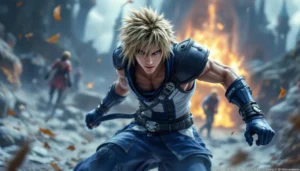
Amano’s design philosophy prioritized personality over anatomical accuracy. Cloud Strife’s spiky blonde hair, oversized sword, and wide eyes communicated rebellion, trauma, and youth instantly. The design works because it’s bold and slightly unconventional, his proportions aren’t realistic, but they’re perfectly suited to convey his arc from mercenary to reluctant hero. Final Fantasy 14 Hrothgar characters similarly leverage exaggerated features to create immediate visual impact.
Amano’s work on FFVII (1997) became the visual benchmark for the entire franchise. His concept art for Sephiroth, the impossibly tall antagonist with the flowing silver hair, set a standard for Final Fantasy villains: visually arresting, slightly inhuman, memorable enough to carry entire games. When Square Enix revisited FFVII through remakes and spin-offs, Amano’s original artistic vision remained the north star, even as modern 3D rendering technology transformed pixels into polygons.
Modern Character Aesthetics in Recent Installments
Contemporary Final Fantasy character design, particularly in FFXVI (2023) and FFVII Remake (2020), represents a shift toward more grounded, textured realism while maintaining the franchise’s flair for dramatic silhouettes and compelling color choices. Characters still stand out visually, they aren’t trying to look like realistic humans but rather stylized interpretations that feel tactile and present.
FFXVI’s Clive Rosfield features a more naturalistic design compared to earlier protagonists, with detailed clothing textures, weathered skin, and expressions that convey age and hardship. His design philosophy reflects a broader industry trend toward prestige gaming, visual polish signals budget and creative ambition. The game’s supporting cast maintains variety in appearance while feeling grounded in the world’s logic.
FFXIV, the ongoing MMO that’s become the franchise’s largest current entry, handles character design differently. Player customization allows thousands of interpretations of the same racial templates. A Hyur might look like a grizzled mercenary or an elegant diplomat. This democratization of design, letting players shape their character’s visual identity, represents a new frontier for Final Fantasy’s artistic philosophy. The Final Fantasy 14 character customization systems encourage creative expression while maintaining franchise cohesion through consistent color theory and proportional relationships.
World-Building Through Visual Art: Environments and Settings
Crafting Immersive Landscapes Across Different Worlds
Final Fantasy has always understood that environments aren’t just backdrops, they’re characters in themselves. The Black Waltz Forest in FFIX communicates danger through twisted trees and sickly purples. The Golden Saucer in FFVII screams spectacle and frivolity with its carnival atmosphere and bright golds. Each location’s visual design tells you what kind of story beat is about to unfold.
Modern entries like FFXVI invest heavily in environmental storytelling. The Rosarian continent features architecture that reflects regional history, cultural shifts, and magical influence. Ash-covered towns show the devastation of Eikon battles. Lush forests contrast with volcanic wastelands. Players never need a quest marker explaining where to go because the environment naturally draws the eye toward important locations.
FFXIV’s world-building through art is particularly impressive given the constraints of an MMO. Designers must create spaces that accommodate hundreds of players while maintaining visual distinctiveness. The Amaranthine Aetheric areas feel alive and authentic even though hosting crowds. Each region’s aesthetic, from the European-influenced Limsa Lominsa to the desert splendor of Ul’dah, serves as instant mental geography for millions of players.
Color Theory and Atmosphere in Final Fantasy Design
Color choices in Final Fantasy design aren’t random. They’re deliberate applications of color theory to manipulate mood and direct attention. Midgar’s industrial grays and browns immediately signal oppression and mechanization. The sky itself, perpetually overcast, reinforces the Shinra Corporation’s stranglehold on the world. When players finally escape the city and see blue sky, the color shift becomes emotionally significant.
FFVI’s World of Ruin uses desaturated, dusty tones to communicate apocalypse. The world feels dead because it literally looks dead. Conversely, the vibrant reds and golds of Kefka’s Tower convey chaos and danger through chromatic intensity. Players feel the threat because they’re visually assaulted.
Recent entries employ more sophisticated lighting and color grading. FFXVI uses color temperature, warm ambers during peaceful moments, cool blues during conflict, to establish emotional rhythms within scenes. The Final Fantasy 14 atmospheric design similarly leverages subtle color shifts to guide players’ emotional responses and highlight narrative importance. Morning light in the starting zones feels hopeful. Nighttime in dangerous areas feels oppressive.
Final Fantasy XIV and Its Unique Artistic Direction
How FFXIV Balances Realism with Fantasy Aesthetics
FFXIV occupies a unique position in the franchise’s artistic evolution. It’s grounded enough to feel like a believable world where thousands of real players coexist, yet fantastical enough to justify dragons, magic, and multiple dimensions. This balance is the result of deliberate artistic choices.
Character models use simplified body proportions compared to photorealism, but detailed textures and realistic material properties (fabric, metal, leather) ground the fantasy elements. An Elezen Dragoon wears ornate armor that feels tactile and functional, not just decorative. The decision to make gear visually match its actual purpose, heavy plate armor looks thick and protective, cloth robes drape naturally, creates visual coherence.
Environmental design in FFXIV reflects the game’s thematic focus on multiple worlds converging. The First and The Source have distinct visual signatures. Amaurot, the dead civilization, uses monolithic stone architecture and haunting blues to communicate loss. Rak’tika Greatwood overflows with lush organic colors and alien plant life. Players can instantly identify which world they’re in through visual language alone.
The Final Fantasy 14 expansions increasingly showcase artistic maturity. Later zones like Labyrinthos and Mare Lamentorum demonstrate what team lead Naoki Yoshida and his art directors envisioned for the game’s future. The moon region uses otherworldly lighting and sparse design to convey isolation while remaining visually stunning.
Player Customization and Personal Creative Expression
Unlike single-player Final Fantasy entries where characters are predetermined, FFXIV allows players to become artists themselves. The character creator’s depth, hundreds of facial options, hair styles, body shapes, enables genuine self-expression. A player can create a Viera Monk that reflects their actual aesthetic preferences or roll a completely fantastical character. This creative freedom became central to the game’s cultural identity.
The glamour system, allowing players to customize gear appearance without affecting stats, takes this further. Thousands of armor and weapon skins exist. Final Fantasy 14’s customization systems let players curate their visual identity as carefully as any single-player protagonist. Some players spend more time optimizing their character’s appearance than grinding combat stats.
This approach fundamentally respects the player’s role in Final Fantasy XIV’s artistic landscape. The world isn’t just something you observe, you’re a visual part of it. Crowded cities like Limsa Lominsa become galleries of player creativity, with thousands of unique character interpretations existing in a single zone.
The Impact of CGI and Cutscene Animation
Technological Advances in Pre-Rendered and Real-Time Graphics
Final Fantasy’s reputation for cutting-edge visuals stems partly from its investment in cinematic presentation. Early entries used pre-rendered backgrounds, static images that allowed developers to create visual complexity impossible in real-time rendering. FFVI’s Opera House sequence remains stunning today, even though it consists of pre-rendered sprites over hand-painted backgrounds.
FFVII in 1997 marked a watershed moment. The game combined 3D character models with pre-rendered environments, creating a visual hybrid that was revolutionary for its time. The opening Midgar sequence, flyover shots, sweeping camera angles, cinematic depth, demonstrated that games could match cinema’s visual ambition. This approach remained standard for decades.
Modern entries like FFXVI use real-time rendering powered by Unreal Engine 5, achieving cinematic visuals while maintaining gameplay interactivity. The distinction between “cutscene” and “gameplay” has blurred, both use the same engine and character models. This seamlessness enhances immersion. When a cutscene transitions to gameplay, the visual continuity remains unbroken.
FFXIV’s approach differs due to MMO constraints. The team uses real-time rendering for most content to ensure server synchronization, reserving pre-rendered cinematics for major story moments. The team has progressively upgraded character model fidelity and environmental texture detail, with each expansion delivering visual upgrades that remain compatible with lower-end PC hardware and Final Fantasy 14 on console platforms.
Memorable Cinematics That Defined the Franchise
Certain cutscenes transcended their games and became cultural touchstones. The Aerith death scene in FFVII remains emotionally devastating decades later. The visual presentation, Aerith’s white dress against the barren landscape, the golden light filtering through the slums, elevated a narrative moment into art. The animation conveyed vulnerability without needing realistic facial expressions. A single tear carries more weight than technical perfection could achieve.
FFX’s water reflecting light scenes showcased how advanced rendering could create breathtaking moments. The underwater sequences, the wedding scene with crystal-clear water effects, these represented what PS2 hardware could achieve when artists pushed the technical boundaries.
Recently, FFXVI’s opening cinematic featuring the first Eikon battle demonstrated that blockbuster gaming cinematography had reached Hollywood-adjacent production values. The creature design, environmental destruction, and camera choreography rival theatrical releases. According to reports on Japanese gaming news outlets, the game’s visual presentation earned industry recognition beyond gaming circles.
FFXIV’s story cinematics have evolved dramatically. The Endwalker expansion finale featured narrative cinematics that players described as emotionally affecting. The team’s use of framing, color grading, and character animation conveyed complex emotions without dialogue, proving that MMO cinematography could match single-player productions’ emotional depth.
The Business of Final Fantasy Art: Merchandise and Spin-Offs
How Artwork Extends Beyond Gaming Platforms
Final Fantasy’s visual identity has become so recognizable that it functions as currency in the merchandise and media ecosystem. Character designs transcend their original games, appearing on clothing, collectible figures, posters, and art books. Yoshitaka Amano’s original concept sketches command collector prices because they represent the franchise’s artistic soul.
Spin-off games like Final Fantasy VII Remake projects and mobile titles leverage established character designs while exploring new visual styles. Final Fantasy XV: A New Empire reimagines the FFXV cast through a different artistic lens. Dissidia Final Fantasy brings characters from across the franchise into a unified visual space, requiring artists to harmonize disparate aesthetic eras.
FFXIV’s success has created an entire merchandise ecosystem around playable characters. Limited-edition figures of popular characters like Emet-Selch or player-favorite NPCs sell out rapidly. The game’s art book, published by Square Enix, provides behind-the-scenes insight into how the team actualizes concept art into 3D models.
Anime and manga adaptations further extend Final Fantasy art into new mediums. The Final Fantasy VII Remake Anthology Ultimania art books represent investments in high-quality visual documentation. According to JRPG news coverage, promotional materials and official art collections have become significant revenue streams, with dedicated fan communities collecting every official image and reproduction.
The franchise’s visual legacy also influences other properties. Square Enix’s commitment to Yoshitaka Amano’s original aesthetic principles, even as technology advanced, demonstrates how foundational good design remains relevant across decades. Companies attempting to create enduring visual franchises study Final Fantasy’s approach to consistency, evolution, and visual identity as instructional case studies.
Conclusion
Final Fantasy’s artistic evolution mirrors gaming’s technological advancement, but it also transcends pure technical capability. From 16-pixel sprite heroes to photorealistic cinematic protagonists, the franchise has demonstrated that visual storytelling remains gaming’s most powerful tool. Whether through Yoshitaka Amano’s iconic concept designs, the atmospheric color theory embedded in each world, or the player-driven customization systems of FFXIV, Final Fantasy understands that art communicates what dialogue cannot.
The franchise’s longevity, surviving market shifts, technical revolutions, and generational changes, rests largely on visual excellence that doesn’t date. A player who loaded up FFVI today would recognize its artistic merit. FFVII’s visual ambition remains clear even though its polygonal limitations. Current entries like FFXVI and ongoing expansions of FFXIV continue pushing artistic boundaries.
For players seeking deeper understanding of how visual design functions within gaming narratives, Final Fantasy offers a masterclass. The franchise proves that technical mastery serves vision, not the reverse. A 16-bit sprite conveying emotion through silhouette and color carries equal artistic weight to a 4K rendered cutscene. What matters is intention, consistency, and respect for the player’s intelligence. That principle, consistent across 35+ years, explains why Final Fantasy’s art remains the franchise’s greatest asset.