Table of Contents
ToggleFinal Fantasy X-2 remains one of the most polarizing and mechanically rich entries in the franchise, and nearly two decades after its original release, it’s still worth revisiting. If you’ve beaten FFX and wondered whether to jump into Spira’s sequel, or you’re a veteran player looking to optimize your run in 2026, this guide has you covered. The game’s combat system, character development mechanics, and content depth rival or exceed many modern action-RPGs, but you need to know what you’re doing to get the most out of your playthrough. Whether you’re tackling the main story, hunting ultimate weapons, or exploring the post-game grind, understanding FFX-2’s systems isn’t just helpful, it’s essential. This guide breaks down everything from Sphere Grid optimization to Dress Sphere combinations, plus the strategies that’ll help you dominate Spira’s toughest challenges.
Key Takeaways
- Final Fantasy X-2’s real-time ATB combat and Dress Sphere system offer exceptional strategic depth that rivals modern action-RPGs, rewarding tactical decision-making and character experimentation.
- Sphere Grid optimization is crucial to progression—focus deep builds on three characters rather than spreading investments across the entire party to ensure specialization and combat effectiveness.
- Dress Spheres enable mid-battle role swaps that create infinite party composition possibilities, allowing you to adapt your team strategy on the fly during challenging boss encounters.
- Story completion takes 40-60 hours with moderate optimization, while ultimate weapon hunts and 100% completion extend gameplay to 200+ hours, making Final Fantasy X-2 exceptionally content-rich.
- Speed is infinitely more valuable in real-time combat than in FFX, making it a priority investment for both DPS and support characters to maximize turn frequency.
- New Game Plus unlocks harder superboss variants and allows carryover of your Sphere Grid and Dress Spheres, enabling challenge runs and completion goals without replaying the entire story.
What Makes Final Fantasy X-2 Stand Out
FFX-2 took enormous risks when it released in 2003. The series’ first direct sequel swapped turn-based combat for real-time Active Time Battle (ATB) mechanics that required split-second positioning and decision-making. Yuna replaced Tidus as the protagonist, and the narrative, initially met with skepticism, has aged surprisingly well as fans reconnected with the cast.
The shift to real-time combat fundamentally changed how you approach boss fights and dungeons. In FFX, you could take your time planning each turn. In FFX-2, you’re constantly monitoring timers, managing party positions, and exploiting a DPS window. This isn’t a flaw: it’s what makes combat feel genuinely intense. The game respects player skill and reward optimal decision-making.
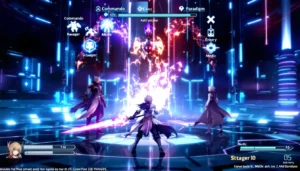
Dress Spheres are FFX-2’s signature mechanic and its greatest strength. Unlike traditional class systems, Dress Spheres let you swap roles on the fly during combat. Your white mage can become a berserker mid-battle. Your physical DPS can switch to support in a single turn. This flexibility creates infinite party composition possibilities and encourages experimentation.
The story, too, deserves recognition. FFX-2 explores themes of identity, legacy, and found family through the eyes of Yuna dealing with post-war Spira. The romance subplot, return of fan-favorite characters, and deeper lore payoffs make it more substantial than most gave it credit for in 2003. Modern Final Fantasy XIV players can see how the franchise evolved directly from these narrative foundations.
The Sphere Grid System Explained
The Sphere Grid in FFX-2 is far less restrictive than its FFX predecessor. Each character still has a unique grid pattern, but you gain significantly more freedom in how you develop them. Understanding the grid’s structure is crucial because unlike FFX, there’s no single “optimal” path, only strategic choices that fit your playstyle.
Each character’s grid contains stat nodes (HP, MP, Strength, Magic, Speed, Accuracy, Defense, Magic Defense, Evasion) and ability nodes (spells, skills, weapon upgrades). Moving across the grid costs Sphere Levels, which you earn from battles. Early game, your progression is linear and guided, but by midgame, the paths open up significantly.
The grid’s complexity comes from branching routes and deadlocked nodes. Some abilities or stats are locked behind gates that require specific Sphere types, Power Spheres unlock strength nodes, White Spheres unlock white magic, and so on. You’ll farm specific sphere types depending on your build priorities.
Advanced Character Development Strategies
Your development strategy depends on your combat role. Tanks need HP and defense investments early. Physical DPS should prioritize Speed and Strength nodes before venturing into damage multipliers. Mages need both Magic and Speed to maintain their rotation rhythm. The key difference from FFX is that Speed is infinitely more valuable in real-time combat, a slower character gets fewer turns, period.
One overlooked strategy is grid-sharing. Characters can use abilities from adjacent grid paths, allowing you to create hybrid builds. For example, Rikku can grab warrior abilities from Wakka’s grid proximity, turning her into a damage-dealing support hybrid. This flexibility lets you cover more roles with fewer characters, critical for boss fights with rotating mechanics.
Early game, avoid overshooting stat nodes. You don’t need every character fully leveled. Yuna, Rikku, and one strong physical DPS carry you through 80% of the game. Investing heavily in one character beats spreading resources thin across the party.
Optimal Sphere Grid Builds for Each Character
Yuna (White Mage/Healer Primary): Prioritize Magic and Spirit nodes before anything else. Her healing scales off Magic, and Spirit increases healing potency. Once you’ve got white magic squared away, grab Summoner spheres to unlock her aeon summons. In endgame, consider adding Black Magic for versatility.
Rikku (Support/Physical DPS Hybrid): Speed is non-negotiable. Get her to the fastest character threshold (around 130+ base speed by lategame) so she can cycle support abilities and debuffs before enemies move. Add Thief abilities for stealing and physical damage when the team’s covered for support.
Paine (Physical DPS/Tank Flex): She’s your most versatile character. Build pure physical DPS early (Strength, Speed, Warrior abilities), then unlock Samurai and Dark Knight spheres for elemental options. She’s effective as a main tank with heavy defense investment or as your top damage dealer.
Wakka (Ranged Physical DPS/Blitzer): Accuracy matters more for Wakka than other physical DPS because his abilities rely on status effects. Grab Blue Mage abilities once he’s dealing solid damage. By lategame, his Trigger Command (overdrives on specific conditions) makes him exceptional against vulnerable enemies.
Lulu (Black Mage/Elemental Support): Magic and Spirit, similar to Yuna. But Lulu benefits from Black Magic elemental coverage, invest in all four elements to exploit enemy weaknesses. Her lower speed is offset by Black Magic range, so she’s less grid-priority for speed than other mages.
Avoid the temptation to level every character equally. Focus three deep rather than spread five thin. Rotating party members keeps you fresh tactically while maintaining DPS output.
Mastering the Dress Sphere Mechanics
Dress Spheres are FFX-2’s innovation, and they’re also its skill ceiling. Swapping Dress Spheres mid-combat costs one turn from the active character, but the tactical advantage often justifies it. Understanding what each Sphere does, when to swap, and how combinations synergize will separate competent players from true veterans.
Each character has access to different Dress Spheres based on their story progression and completion of side content. Yuna, as the protagonist, gets the broadest array. Rikku focuses on utility (Thief, Machina Maw, Mascot for humor and healing). Paine excels in pure offense (Warrior, Dark Knight, Samurai). The system encourages you to experiment, which is where FFX-2’s combat depth shines.
Dress Sphere mechanics extend beyond combat. Some Dress Spheres grant field abilities, Mascot Sphere lets you interact with certain NPCs, Thief Sphere opens treasure chests, and others unlock hidden paths. This creates light puzzle elements within dungeons, rewarding exploration.
Best Dress Sphere Combinations for Combat
The Stall & Control Setup: White Mage (primary healer) + Warrior (secondary tank) + Samurai (physical DPS). This trio handles any story encounter. White Mage covers healing, Warrior provides damage mitigation, and Samurai deals reliable physical damage. Swap Warrior to Thief if you need evasion against a magic-heavy boss.
The Elemental Execution Build: Black Mage (primary damage), Alchemist (support/buffs), + Gunner (secondary DPS). Stack elemental weaknesses. If a boss is weak to fire, Black Mage and Gunner both exploit it while Alchemist amplifies damage with buff spells. This build excels against early-to-midgame bosses with clear elemental patterns.
The Berserker Blitz (Endgame): Berserker (pure offense) + Dark Knight (elemental physical DPS) + White Mage (healing). Load up on offensive abilities and unleash them in rapid succession. Berserker’s auto-attack is insane once geared, and Dark Knight covers elemental gaps. White Mage keeps you alive. This build struggles against quick enemies (Berserker’s slower) but demolishes tanky bosses.
The Hybrid Support Flex: Mascot (AoE attacks + healing) + Thief (crowd control + buffs) + Samurai (consistent DPS). Less optimized than pure builds, but incredibly forgiving for casual play and story progression.
How to Unlock Hidden Dress Spheres
Several Dress Spheres are locked behind endgame content, side quests, and hidden achievements. Here’s what you need to hunt down:
Gunner Sphere: Available early in Guado Salam after defeating a specific boss. Anyone can equip it post-acquisition.
Dark Knight & Mascot Spheres: Obtained through Chocobo racing side content. Requires patience but grants powerful endgame options.
Berserker Sphere: Dropped by specific fiends in the Farplane. Hunt the recommended enemies near Bevelle or the Guado region.
Psychic Sphere: Granted after collecting 20 chests during a specific sidequest chain. Track your progress in your item inventory.
Alchemist Sphere: Available through the Recruitment task for the Gullwings airship side content. Costs currency earned from optional fights.
Sword Master Sphere: One of the rarest drops. Defeat Chaos’s minions in the postgame Farplane to acquire it.
Songstress Sphere (Yuna exclusive): Story-locked. Automatically gained late in Chapter 5.
The grind for hidden Dress Spheres isn’t mandatory for story completion but drastically improves endgame viability. Prioritize Dark Knight and Berserker for raw power, Alchemist if you want support flexibility.
Essential Tips for Completing the Main Story
FFX-2 spans five chapters, each roughly 8-12 hours depending on side content completion. The story progresses through Spira’s major regions, with each chapter unlocking new areas and dungeons. Here’s what you need to know to avoid hitting brick walls.
Navigating Early Game Challenges
The early game (Chapters 1-2) feels deceptively easy because the difficulty curve is gentle. Don’t let that fool you, you’re still building the foundations for midgame bosses. Here’s what matters:
Earn Sphere Levels aggressively. The Kilika Woods and early dungeon encounters drop decent Sphere Levels. Don’t rush past side battles. Each encounter is a potential resource investment.
Weapon customization starts early. Collect various weapons from chests and vendors. Each character can equip different weapon types, and swapping grants stat boosts. Yuna with a staff is mathematically different from Yuna with a rod. Check your status screen for precision.
Build your first Dress Sphere coverage. By Chapter 2, you’ll have access to 2-3 Dress Spheres per character. Aim for one healer (White Mage), one physical DPS (Warrior or Thief), and one flexible role (Gunner or Ranger). This trio carries you through early story beats.
Don’t overlook elemental resistance. Certain regions (Besaid Cloister, Luca) have elemental damage patterns. Grab armor with fire or water resistance from shops. The gold investment is minimal early on and saves HP in longer dungeons.
Recruit all three party members (Yuna, Rikku, Paine) by the end of Chapter 1. The game’s narrative and combat mechanics demand all three for variety and party flexibility.
Midgame Progression and Boss Strategies
Chapters 3-4 introduce the game’s toughest story bosses. At this point, your Sphere Grid builds matter. Here are the critical encounters:
Bevelle Underground (Chapter 3 Boss): A dodge puzzle hybrid. You’re up against multiple enemy phases with increasing difficulty. The last phase is a heavy physical DPS check. Bring Samurai or Warrior Dress Spheres for raw damage output. Attack speed matters more than total damage here because you need to meet a DPS threshold before a critical mechanic triggers.
Seymour Natus (Chapter 4 Boss): One of FFX-2’s toughest fights. He hits hard, has high defenses, and cycles between multiple phases. Start with elemental damage (Black Mage) to soften his defenses. Switch to physical DPS (Samurai, Dark Knight) once shields are down. Most crucially, maintain consistent healing with White Mage rotation. If your healer’s speed is slow, he’ll die before you can react to Seymour’s big attack. This is where Speed investments in your healer matters.
Aeons/Summon Encounters (Variable): Throughout midgame, you’ll face summons from FFX. They’re tanky and deal AoE damage. Stack elemental weaknesses to burst them down before they heal or buff themselves. Gunner Dress Sphere is excellent here for reliable ranged damage.
General Midgame Strategy: By Chapter 3, your Sphere Grid should show clear specialization. Your healer should have max white magic, your DPS should have 110+ base Strength or Magic (depending on type), and your support character should have crowd control abilities. Avoid spreading investments too thin. If everyone’s “okay” at everything, nobody excels when you need them.
Farm currency aggressively in Chapter 3-4 side content. Endgame weapons and armor are expensive, and you’ll want resources set aside for those purchases.
Use the Final Fantasy 14 Expansions guide if you’re interested in how the series evolved narrative-wise post-FFX-2, though they’re separate stories.
Endgame Content and Optional Bosses
Once you’ve beaten the main story (Chapter 5 conclusion), FFX-2’s true endgame opens up. Optional bosses, ultimate weapon hunts, and postgame dungeons offer hundreds of hours of content for completionists.
Endgame encounters are significantly harder than story bosses. They exploit every mechanic and demand precision. A boss fight that took 5 minutes in the story might take 15-20 in endgame because their defenses and HP are multiplied. This is where optimal Sphere Grid builds become non-negotiable.
Chaos (Secret Superboss): Hidden in the Farplane, Chaos is optional but iconic. He has multiple health bars, status immunities, and punishing AoE attacks. Beating Chaos requires near-perfect gear, maxed Sphere Grids, and optimal Dress Sphere combos. Most players attempt him after 100+ hours of playtime with fully developed characters.
Evrae’s Superboss Form: Evrae from FFX returns as a brutally hard optional encounter. High physical defense forces you to stack elemental or magical damage. Bring Black Mage and Samurai Dress Spheres for elemental and physical hybrid damage.
Abyss Monster Spawns: In the Farplane, rare monsters spawn with unique drops (ultimate weapons, rare spheres). Hunting them is content on its own. You’re essentially farming a specific enemy type, tracking drops, and repeating until you have all variants.
The difficulty jump from story to endgame is steep but fair. It rewards preparation and punishes sloppiness. This is where Metacritic reviews often praised FFX-2’s combat depth, endgame content respects player skill more than many modern RPGs.
Hunting for Ultimate Weapons
Ultimate Weapons grant each character a unique Overdrive ability (a super move) and stat boosts. They’re worth hunting because they fundamentally change combat pacing and open new strategies.
Yuna’s Ultimate Weapon (Nirvana): Dropped by beating specific Abyss monster spawns. Grind rare monster encounters until drops appear. Nirvana grants Yuna access to a damage-dealing Overdrive instead of healing, opening up hybrid builds.
Rikku’s Ultimate Weapon (Godly Armlet): Obtained through treasure hunting in the Guado Salam underground. Requires extensive dungeon exploration and solving environmental puzzles. Her ultimate weapon boosts Speed and grants an offensive Overdrive.
Paine’s Ultimate Weapon (Ixion/Gunblade): Earned through fighting specific endgame superbosses and collecting rare sphere drops. Very grind-heavy but grants a physical damage Overdrive that rivals Black Mage in raw DPS.
Wakka’s Ultimate Weapon (Celestial Weapon): Found by grinding rare fiend encounters and piecing together sphere fragments. His ultimate grants access to a ranged Overdrive that bypasses typical defensive mechanics.
Lulu’s Ultimate Weapon (Onion Knight Staff): Rarest to obtain. Requires endgame farming and defeating specific boss variants. Her ultimate weapon grants an elemental-stacking Overdrive that combines all four elements into a single massive hit.
Ultimate weapon grinding is optional but addictive once you start. The payoff in combat feels genuinely earned. Most completionists hunt all five by hour 150+.
Side Quests Worth Your Time
FFX-2 includes dozens of optional quests ranging from story vignettes to grinding campaigns. Not all are worth your time, but several unlock rare Dress Spheres, weapons, or massive currency rewards. Here’s what deserves your attention.
The Chocobo Racing Side Quests: Time-gated optional races where you train a chocobo to race faster birds. Winning nets rare Sphere items and unlocks the Berserker and Dark Knight Dress Spheres. It’s a mini-game within the game, and honestly? It’s fun. The difficulty and reward pacing feels balanced.
The Gullwings Recruitment Missions: Earn currency by completing combat tasks (beat X enemies, use Y ability, survive Z turns). Use currency to unlock ship upgrades and rare Dress Spheres. This is a grinding task but allows you to grind on your own schedule against chosen enemy types.
Character Personal Quests: Each party member has a character-specific sidequest chain that deepens their story. These aren’t mandatory for progression but offer narrative payoff and unlock unique abilities or stat boosts. Paine’s quest chain is particularly good if you want deeper lore context.
Treasure Hunting & Hidden Chests: Scattered throughout dungeons are chests containing rare weapons, spheres, and currency. Many require specific Dress Sphere field abilities (Thief to open locks, Mascot for creature interactions). Exploring for treasures funds your ultimate weapon hunts.
Where to Find Rare Items and Treasures
Besaid Region: Early-game treasures net basic weapons and recovery items. By endgame standards, they’re weak, but they fund your Chapter 1-2 purchases.
Luca Amusement Park: Hidden chests contain rare equipment. Requires Thief Sphere access to fully loot. Worth revisiting once you’ve unlocked Thief in Chapter 2.
Bevelle Underground: Late-game treasure hotspot with ultimate weapon components and rare spheres. Dangerous enemies guard chests, so come prepared with endgame builds.
Farplane Abyss: The postgame dungeon. Every chest is a rare drop or component drop. Treasure here directly funds ultimate weapon hunts and endgame gear purchases.
Guado Salam Hidden Vaults: Requires solving environmental puzzles and specific Dress Sphere abilities. Rewards are among the best in the game, rare weapons, currency, and ultimate weapon materials.
Zanarkand Ruins: Final dungeon location. Treasures here are endgame-caliber. Most require you to tackle optional bosses guarding chests. Heavily rewarded for completion.
Systematic treasure hunting takes 20-30 hours but nets enough currency to buy endgame gear outright instead of grinding raw currency. It’s an efficient use of time if you know where to look.
The New Game Plus Experience
After beating the final boss, FFX-2 offers New Game Plus (NG+) with carryovers and increased difficulty. This mode is where the game truly respects veteran players.
NG+ starts you at Chapter 1 with your previous save’s Sphere Grid intact. All unlocked Dress Spheres transfer over, meaning you start with full combat flexibility from hour one. Enemy scaling increases significantly, so early encounters hit harder than they did in your first playthrough. This isn’t artificial inflation, it’s balanced around having strong gear and leveled characters.
Many players reserve NG+ for 100% completion runs or challenge runs (no Sphere Grid investment, minimal healing, solo character attempts). The flexibility of carryover mechanics means NG+ can be tailored to your goals.
NG+ also allows you to hunt missed ultimate weapons or Dress Spheres without replaying 100+ hours of story. If you killed the final boss but didn’t grab Lulu’s ultimate weapon, you can beeline to endgame farming while story progresses in the background.
One overlooked aspect: NG+ unlocks harder versions of superbosses. Chaos returns with double health pools and new attack patterns. Evrae gets additional phases. This is where skill truly shines, you can’t out-gear these encounters forever.
Critical reviews from outlets like IGN praised FFX-2’s NG+ implementation for not watering down difficulty. The game respects that you’ve already beaten it and adjusts accordingly. If you loved your first run, NG+ extends the experience indefinitely.
Conclusion
Final Fantasy X-2 is a masterclass in combat depth, character customization, and optional content design. Its real-time ATB system and Dress Sphere mechanics age better than most early-2000s RPGs, offering complexity that still challenges players in 2026.
The path forward depends on what you’re hunting. Story completion is achievable in 40-60 hours with moderate optimization. Ultimate weapons and 100% completion extend that to 200+ hours comfortably. Even casual players find 100+ hours of engaging content without min-maxing Sphere Grid builds.
Whatever your goal, casual story playthrough, competitive endgame farming, or completionist grind, the systems in place respect your investment. Sphere Grids reward thoughtful planning. Dress Spheres reward tactical flexibility. Superbosses reward preparation and skill.
If you’ve been on the fence about FFX-2, the time is now. Emulation options exist on modern platforms, and the International+ version (preferred for balance) offers refined mechanics over the original PS2 release. The game’s complexity is genuine, not gatekeeping. Pick it up, experiment with builds, and discover why FFX-2’s cult following continues to grow.