Table of Contents
ToggleFinal Fantasy 8 stands as one of the most divisive entries in the franchise, but its characters remain undeniably memorable. Released in 1999 for PlayStation and later ported to PC, Nintendo Switch, and mobile platforms, FF8 introduced a cast that blurred the line between JRPG conventions and psychological complexity. Whether you’re revisiting Balamb Garden for the first time in years or experiencing this classic on Switch, understanding each character’s role, motivations, and combat potential is essential to appreciating what makes FF8’s narrative tick. This guide breaks down every major character, from the brooding protagonist to the time-manipulating final boss, with specific details on their abilities, story arcs, and impact on the game’s world.
Key Takeaways
- Final Fantasy 8 characters blend psychological complexity with mechanical depth, with Squall Leonhart’s journey from cynical loner to trusted leader representing the game’s core theme of emotional growth through human connection.
- The Gunblade mechanic and junction system reward player skill and strategic optimization, making Final Fantasy 8 character builds essential to both narrative immersion and combat success across all platforms.
- Rinoa Heartilly’s dual role as romantic interest and Sorceress creates existential conflict that transcends typical JRPG romance, exploring themes of identity and predetermined destiny with surprising psychological maturity.
- Ultimecia stands apart as a final boss driven by existential dread rather than power hunger, making her temporal manipulation and paradoxical goals philosophically complex rather than purely antagonistic.
- Supporting cast members like Quistis, Zell, and Irvine each harbor psychological depth beneath surface archetypes, demonstrating how Final Fantasy 8 treats mental health struggles and personal trauma with narrative sophistication.
- The game’s character-driven storytelling across flashback sequences with Laguna Loire and relationships among the main cast influenced modern JRPG design, proving that emotional depth resonates more powerfully than spectacle alone.
Squall Leonhart: The Reluctant Hero
Background and Character Development
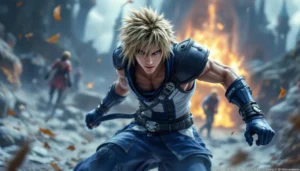
Squall Leonhart isn’t your typical Final Fantasy protagonist. He’s a 17-year-old SeeD mercenary trained by Balamb Garden, emotionally guarded, and deeply cynical about everything, including heroism itself. Unlike Cloud Strife’s fragmented psyche or Cecil’s straightforward redemption arc, Squall’s journey is about learning to trust others and confront his past. His cold demeanor masks deep insecurity stemming from childhood trauma related to his mother, Raine, and his presumed dead father Laguna Loire.
Throughout the game, Squall transforms from a loner who barely acknowledges his party members into someone willing to sacrifice everything for those he cares about. This character arc unfolds gradually, making his emotional beats feel earned rather than forced. By the time he faces Ultimecia, Squall has reconciled with his father and embraced his role as more than just a soldier.
Abilities and Combat Style
Squall’s signature weapon is the Gunblade, a hybrid blade-gun hybrid that deals physical damage with ranged elements. Unlike traditional sword-wielders, the Gunblade’s effectiveness depends on timed button presses during attacks, hit the trigger at the right moment for increased damage. This mechanic makes Squall skill-intensive compared to other party members.
His Limit Break ability, Renzokuken, unleashes a rapid-fire combo that can trigger a bonus “Lion Heart” finisher if timed perfectly. At max Limit Break level, this attack rivals the most powerful moves in the game. Squall excels as a physical DPS character with respectable magic potential through junction systems.
Abilities like Gunblade Mastery allow Squall to equip different Gunblade variations throughout the game, each with unique properties. His GF (Guardian Force) compatibility favors Lionheart, Griever, and Leviathan, making him naturally suited for summon-based builds. On modern platforms like Nintendo Switch, Squall’s control scheme feels intuitive, making his combat style accessible without sacrificing depth.
Rinoa Heartilly: The Sorceress with a Heart
Role in the Story
Rinoa Heartilly enters as a rebellious princess turned resistance fighter against Galbadia’s military occupation. Initially presented as Squall’s love interest, her character deepens significantly when her true nature as a Sorceress is revealed. This twist reframes her entire journey, she’s not just fighting for freedom: she’s struggling with an inherited magical curse that could consume her identity.
Her romantic subplot with Squall becomes emotionally complex once you understand that her Sorceress powers may eventually override her humanity, echoing the fate of Sorceress Edea. This existential conflict gives Rinoa genuine depth beyond typical JRPG romance. By the game’s end, their relationship transcends typical save-the-girl mechanics and becomes about two people choosing each other even though impossible odds.
Rinoa also serves as the emotional anchor between Squall’s cold rationality and the party’s warmth, making her essential to the group dynamic beyond pure mechanical value.
Powers and Support Abilities
Rinoa wields Angelo, a pet dog summoned through her Limit Break Wishing Star. This ability makes her unique, instead of direct combat, she relies on summoning and ranged pet attacks. Her magic pool is strong, with natural affinity for healing spells and status effects, making her an excellent support character in extended boss battles.
Her Sorceress powers grant her Angel Wing, a time-limited invulnerability state that increases magic casting speed but consumes her health over time. This high-risk, high-reward ability demands tactical positioning and knowledge of enemy patterns. Rinoa’s junction system naturally favors magic-based Guardian Forces like Ifrit and Siren, amplifying her support capabilities.
When properly equipped with junctions, Rinoa can rival dedicated magic users while maintaining her summon utility. Her versatility makes her invaluable in mixed party compositions, especially during late-game content where both offense and defense matter equally.
The Supporting Cast: Irvine, Selphie, and Quistis
Irvine Kinneas: The Sharpshooter
Irvine Kinneas is Balamb Garden’s gunman, a charming womanizer with a sharpshooting reputation that precedes him. His weapon, the Shotgun, deals heavy physical damage with moderate range, and his Limit Break Trigger Command lets him fire multiple shots with variable effectiveness. Unlike Squall’s timed mechanics, Irvine’s combat relies on ammunition management, his damage scales with ammo type and quantity.
Irvine’s personal story reveals he shares deep history with several main characters, particularly Squall and Rinoa. This connection makes his seemingly comedic persona a mask for genuine emotional burden. His role as comic relief doesn’t diminish his mechanical importance: properly built, he becomes one of the game’s highest physical DPS dealers.
On Switch, Irvine’s ranged combat feels satisfying with modern controls, making his gunplay intuitive without requiring complex button sequences. His versatility in different party configurations makes him valuable across all difficulty levels.
Selphie Tilmitt: The Cheerful Gunblade Master
Selphie Tilmitt is Balamb Garden’s cheerful freshman and resident airhead, except she’s far more competent than her demeanor suggests. She wields Nunchaku as her primary weapon and can equip various gun-based arms as alternatives. Her Limit Break Slot introduces a RNG (random number generation) element to her damage output, rewarding players who understand probability mechanics.
Even though her youthful appearance, Selphie packs significant magical potential and versatility. Her Gunblade variation emphasizes physical strikes over timing-based mechanics, making her more straightforward than Squall. She shines in both offensive and support roles depending on junction choices, providing flexible team compositions for different boss encounters.
Her personality, perpetually upbeat and naive, contrasts sharply with Squall’s cynicism, creating organic party chemistry. Mechanically, she’s a solid middle-ground character who doesn’t excel at any single role but refuses to fail at any either.
Quistis Trepe: The Intelligent Instructor
Quistis Trepe is Balamb Garden’s youngest instructor, a prodigy whose intelligence rivals her combat prowess. She wields Whips as her primary weapon, dealing moderate physical damage with excellent magic scaling. Her Limit Break Blue Magic allows her to learn and replicate enemy abilities, making her adaptable across diverse encounters.
Quistis struggles with impostor syndrome even though her obvious competence, viewing herself as inadequate compared to other SeeDs. This internal conflict drives her character arc more than external plot events. Her unrequited feelings for Squall add emotional complexity, though the game never forces this into the narrative.
Mechanically, Quistis serves as the party’s primary magic user if built correctly, with exceptional spell coverage through her Blue Magic system. She can fill multiple roles, buffer, debuffer, and damage dealer, making her invaluable during demanding battles. Her whip weapon scale better with magic junctions than physical ones, rewarding players who understand FF8’s junction system optimization.
Laguna Loire: The Adventurer with a Secret
Connection to Squall and the Main Plot
Laguna Loire is Squall’s father, though this revelation remains hidden until the game’s final acts. He’s a charming, optimistic man who contrasts sharply with Squall’s pessimism, a genetic rebellion that explains much about their personalities. Laguna’s adventures 17 years before the main narrative set off the chain of events leading to Squall’s creation and training, making him inadvertently responsible for the entire conflict.
The game explores Laguna through flashback sequences where he’s fully playable, revealing he wasn’t always the confident man who eventually becomes president. Early Laguna is insecure, making mistakes that haunt him throughout the story. Discovering that Squall shares his father’s courage even though their differences creates emotional resonance that reframes both characters’ arcs.
Their reunion during the final confrontation with Ultimecia represents not just a family bonding moment but Squall’s acceptance that heroism isn’t solitary, it requires trusting others, including family. This thematic payoff makes Laguna’s presence essential to the narrative’s resolution.
Playable Segments and Impact
Laguna functions as a fully playable character during flashback sequences, using Guns as his primary weapon and accessing unique abilities unavailable to other party members. His combat style emphasizes ranged attacks and machine-gun fire, making him mechanically distinct from the main SeeD cast. His Limit Break Desperado unleashes devastating firepower, though ammunition management remains critical.
During playable Laguna segments, players control him alongside his companions Ward and Kiros, experiencing his adventures firsthand. These sequences break up the main narrative pacing while providing essential worldbuilding context. Laguna’s story unfolds across Winhill, Esthar, and other locations, showing how his actions shaped the game’s political landscape.
These flashback missions aren’t mandatory grinding, they’re narrative-driven segments that reward exploration and combat engagement. Players familiar with modern JRPG pacing recognize these sections as intentional character development tools rather than padding.
Antagonists: Ultimecia and Her Allies
Ultimecia: The Final Threat
Ultimecia is the game’s primary antagonist and perhaps the most complex final boss in Final Fantasy history. She’s a time-manipulating Sorceress from the distant future, desperate to prevent her own creation through a paradoxical plan involving Squall and Rinoa. Unlike typical JRPG villains driven by power hunger or revenge, Ultimecia’s motivation stems from existential dread, she wants to rewrite reality itself to ensure her non-existence.
Ultimecia’s ultimate form transformation into Griever Ultimecia represents the physical manifestation of her power and ambition. The final boss fight spans multiple phases, requiring adaptability and understanding of weakness patterns. Her Time magic defines her threat level, with abilities like Apocalypse capable of devastating the entire party if players lack proper status protections.
What separates Ultimecia from standard final bosses is her philosophical depth. She’s not evil in a traditional sense, she’s terrified of being born, creating a conflict that no amount of superior weapons solves. Understanding her motivations makes the victory feel earned rather than inevitable, elevating FF8’s narrative conclusion beyond typical good-versus-evil framing.
Seifer Almasy: The Rival and Sorceress’s Knight
Seifer Almasy serves as Squall’s bitter rival and unexpected antagonist. He’s a SeeD candidate with genuine skill but inferior discipline, his pride frequently outweighing his judgment. When he encounters Sorceress Edea, Seifer becomes her Knight, dedicating himself to serving her will in exchange for power and status.
Seifer’s tragedy lies in his inability to recognize manipulation. He views his service to Edea as noble, positioning himself as the protagonist of his own story when reality reveals him as a pawn in larger schemes. His final fight against Squall carries emotional weight, two former colleagues forced into conflict through circumstance and choice.
Mechanically, Seifer wields a Gunblade identical to Squall’s, creating symmetry in their rivalry. His Limit Break Renzokuken mirrors Squall’s, making their combat styles mechanically equivalent even though their philosophical opposition. This design choice reinforces their paralleled character arcs.
The Sorceress Edea and Her Plans
Edea begins the game as Ultimecia’s pawn, possessed by the future Sorceress and manipulating Galbadian politics toward specific ends. Her possession removes her agency entirely, making her the true victim of Ultimecia’s temporal manipulation. Once freed from possession, Edea reveals herself as Squall’s adoptive mother and a tragic figure caught between her present and a future she can’t fully comprehend.
Edea’s control over Seifer demonstrates how Ultimecia weaponizes both love and ambition, Seifer becomes complicit in Edea’s plans because she offers him validation and power. The dynamic between Edea and Seifer illustrates how antagonists function not in isolation but through systems of manipulation.
By the game’s conclusion, Edea transitions from threatening antagonist to sympathetic character, asking Squall for forgiveness and understanding. This redemption arc, though brief, reframes earlier conflicts as tragic misunderstandings rather than battles against clear evil.
Minor Characters and Hidden Depths
Zell Dincht: The Martial Artist
Zell Dincht is Balamb Garden’s hot-headed martial artist, prone to outbursts but possessing genuine courage and combat skill. He wields Gauntlets as his primary weapon, dealing physical damage through martial arts rather than traditional weapons. His Limit Break Duel requires real-time input, rewarding players with extended combos if they maintain button-press timing.
Zell’s story involves searching for his missing father, adding personal stakes to his journey beyond party loyalty. His hyperactive personality masks insecurity about his abilities and place within the SeeD hierarchy. Unlike Squall’s cold dismissal or Rinoa’s emotional openness, Zell represents genuine teenage anxiety trying to prove himself.
Mechanically, Zell functions as a dedicated physical damage dealer with exceptional critical hit potential. His gauntlet variations scale with physical junctions, and his rapid attack speed makes him valuable against high-defense enemies. For players seeking straightforward combat without complex mechanics, Zell provides accessible gameplay without sacrificing effectiveness.
Ward and Kiros: Laguna’s Companions
Ward Zabac and Kiros Seagill are Laguna’s closest companions during the Winhill arc, joining his flashback sequences as fully playable characters. Ward wields Harpoons for ranged physical attacks, emphasizing slow but powerful strikes. Kiros uses Dual Blades, delivering rapid multi-hit combos with moderate damage per strike.
Their partnership with Laguna demonstrates the importance of loyalty and friendship within FF8’s narrative framework. Ward’s silent stoicism contrasts with Kiros’s verbal expressiveness, creating dynamic party chemistry. While they remain largely underdeveloped compared to main cast members, their presence grounds Laguna’s story in personal relationships rather than abstract heroism.
These characters become available during specific game segments, and players can optimize their combat potential through identical junction systems as the main party. Understanding their mechanical roles helps players successfully complete Laguna’s adventures, which contribute to overall character development and world comprehension.
Character Relationships and Story Arcs
Romantic Tensions and Personal Conflicts
FF8 boldly integrates romance as central narrative element rather than optional side content. Squall and Rinoa’s relationship unfolds across the entire game, beginning with reluctant partnership and evolving into mutual dependence. Their love becomes genuinely complicated once Rinoa’s Sorceress nature emerges, they’re forced to choose each other even though knowing she may not remain herself.
Quistis’s unrequited feelings for Squall add emotional complexity to party dynamics without derailing the main romantic arc. Her acceptance of his feelings for Rinoa demonstrates character growth and emotional maturity. Similarly, Selphie’s obvious crush on Irvine creates a secondary romantic subplot that provides lighter narrative balance.
These relationship dynamics feel earned because the game allows character moments outside combat. Quiet conversations during breaks and emotional reactions to story developments make relationships feel organic rather than scripted. The game trusts players to understand subtext rather than explaining every emotional beat, which aligns with modern gaming storytelling standards. Final Fantasy 14 Expansions similarly integrate relationship building throughout their narratives, showing how character connections drive engagement across the entire Final Fantasy franchise.
Psychological Themes and Growth
Beyond surface-level romance, FF8 explores psychological trauma, identity, and the cost of forced maturation. Squall’s emotional walls developed from childhood abandonment issues, making his opening up to others represent genuine vulnerability rather than weakness. Rinoa’s struggle with inherited power mirrors discussions of bodily autonomy and predetermined destiny, themes that remain relevant decades after FF8’s release.
Selphie’s apparent naivety masks deeper insecurity about belonging in a military organization. Zell’s hyperactivity reflects anxiety about proving himself worthy of SeeD status. Quistis’s perfectionism stems from imposter syndrome even though objective competence. Each character’s behavior reveals psychological complexity rather than archetypal flattening.
The game treats these psychological struggles with surprising maturity, never dismissing mental health struggles as simple obstacles to overcome. Squall’s depression and isolation don’t vanish, they gradually transform into healthier coping mechanisms through human connection. This nuanced approach to character development influenced countless JRPGs that followed, establishing character-driven storytelling as essential to the genre’s credibility.
Meanwhile, recent JRPG character analysis continues examining FF8’s character work, showing the game’s influence on modern role-playing game narrative design. Characters don’t simply become stronger through experience points, they grow emotionally through relationships and confronting their trauma, making FF8 a psychological study wrapped in JRPG mechanics.
Conclusion
Final Fantasy 8’s character roster represents a watershed moment in JRPG storytelling, prioritizing psychological realism over archetypal simplicity. From Squall’s gradual emotional opening to Ultimecia’s existential desperation, each character contributes meaning rather than serving purely mechanical functions.
Whether you’re playing the original PlayStation version, the modern PC port, or the portable Switch adaptation, these characters remain compelling across all platforms. Understanding their motivations, abilities, and relationships enhances both narrative immersion and strategic combat optimization. FF8 proves that characters can simultaneously function as complex emotional entities and tactical game pieces without sacrificing either dimension.
The game’s character-driven narrative continues inspiring modern games, proving that deeper character development resonates more powerfully than spectacle alone. For returning players and newcomers alike, FF8’s cast remains a masterclass in JRPG character design, flawed, relatable, and genuinely memorable.